Category: Uncategorized

  • Tips For Conducting Meaningful Interviews

    Tips For Conducting Meaningful Interviews

    What’s The Point?

    Why do journalists interview people? The basic interview question is meant to confirm facts. This is often where credible information comes from. But, the real story comes from emotions.

    Traditional journalists should remain objective in their stories. So, we rely on real people to convey real feelings. Quotes that come from interviews should reach out to your audience in a way that a journalist often shouldn’t. These subjective and emotional quotes make your stories more memorable and impactful.

    When your audience feels something, your story is more likely to make a difference. Your audience will carry the story with them. It will change the way they look at the world. It will hopefully make them more empathetic. A journalist’s words should make the audience more informed. The quotes should make the audience remember they’re human.

    Quick Tips

    This lecture is not necessarily relevant in every single interview scenario. You will need to change your interview technique depending on if your interview is live or pre-recorded. If you plan to edit your interview, you will use different styles than if your interview is live-to-tape. If you’re interviewing a violent criminal, you may want to be a bit more careful than if you’re interviewing a crime victim. But here are some quick tips that can be useful in most interviews:

    • Prepare. Research the person you’re going to interview. Look at their resume and their social media presence. Can you find a bio about them online? Look for details that may reveal an emotional story. Have they moved around a lot? How did that affect their relationships or family? Did they have a gap in their work experience? Did that create financial struggle? Or did they use the time to travel the world?
    • Write a list of questions. Sometimes you’ll forget what you wanted to ask them. Sometimes the person you’re trying to interview will only give you one-word answers. A list of questions is a good back up to keep the conversation going.
    • Before you start the interview, remind them to ignore any recording devices like cameras and microphones. Tell them just to look at you because some may worry that they’re expected to look at the camera (and that usually looks super awkward).
    • Make them feel at ease by warming them up with friendly conversation. Be charming and human. Calm their nerves.
    • Listen to what they say. This is harder than it seems, especially if you prepared and brought your list of questions. Don’t be so married to your preparation that you miss opportunities to coach them to elaborate on interesting nuggets of information.
    • Swap verbal reactions with physical ones to avoid adding distractions in your audio. In a conversation, you often react with sounds like “hm.” If you plan on pulling sound bites from your interview audio, avoid making sounds when people are talking. This is harder than it seems and takes practice because it’s often polite to engage verbally in conversations while others are talking. Focus on making eye contact and expressing your engagement in non-verbal ways like smiles or frowns. If your interview will air in its entirety, this isn’t as big of an issue.
    • Trade personal stories. Sometimes sharing something about yourself will increase intimacy and encourage the person you’re interviewing to open up to you.
    • What you should ask during (non-live) interviews:
      • Please say your first and last name and then spell it (you don’t want to mispronounce or misspell their name so don’t forget this step). You may also want to ask them for their occupational title.
      • How did that make you feel?
      • Do you have anything you want to add?
      • Are there any other people I should talk to about this?
      • Do you know of any other issues or people I should look into covering in the future?

    Interviews Are Uncomfortable

    Learning how to interview is uncomfortable because talking to strangers is uncomfortable. You’re not alone. Even the most seasoned journalists feel a bit nervous when they start an interview with someone they don’t know.

    You may be inclined to hide your discomfort behind a wall of professionalism. Don’t. Let yourself be vulnerable. When you walk up to a stranger and start talking to them, they’ll feel uncomfortable too. Reporters are intimidating. People aren’t used to talking to the media. So be a real human and smile. Be nice. Be grateful. Connect with them like a normal human being. Find something you have in common to break the ice. Have a conversation. You will feel less anxious, and your interview will likely result in a better story.

    You will get rejected, often. Welcome to journalism. It’s sometimes a knee-jerk reaction for a person to decline to talk to you. You could say “thanks anyway.” Or you could understand that perhaps a bit of persistence and patience may get them to open up to you. If someone says they don’t want to be interviewed, be polite and vulnerable. Stick around a bit and just talk to them. Maybe they’ll explain why they don’t want to be interviewed. Maybe they’ll change their mind. Don’t be rude.

    The rules change when you’re interviewing a corrupt lawmaker, for example. Of course, they won’t want to answer your questions. It’s your job to keep asking. Sometimes you have to be aggressive because lawmakers have a responsibility to your audience, and so do you. But that interviewing style is for a different lecture. When you’re trying to interview a “regular” person, try nicely to make a connection with them.

    In my experience, most people want to be listened to. Don’t treat people like props or quotes. Give them the opportunity to share what they feel. Most people will be honored that someone actually cares what they think. People want to tell their story. It’s your job to create an environment where they feel comfortable to open up to you.

    An interview should be a mutually beneficial experience. In some instances, a journalist can play a therapeutic role.

    Interviews About Interviews

    The Turnaround podcast is a great resource for behind the scenes trade secrets and tips. Jesse Thorn interviews some of America’s best interviewers about interviewing. Here are a couple episodes that are particularly relevant to new journalists.

    Listen Here Courtesy Columbia Journalism Review

    Audie Cornish — July 4, 2017
    Click here for transcript

    Audie Cornish is host of NPR’s All Things Considered. Previously, she hosted Weekend Edition Sunday and reported from Capitol Hill. Before coming to NPR, Cornish was a reporter for Boston’s award-winning public radio station WBUR.

    Terry Gross — August 18, 2017
    Click here for transcript

    Terry Gross hosted Fresh Air since 1975, which makes her not only one of the longest-working interviewers today, but one of the most popular: Fresh Air is broadcast on 566 stations and became the first non-drive time show in public radio history to reach more than five million listeners each week. She has been awarded a Peabody, a Gracie Award, and the Edward R. Murrow Award. Her book All I Did Was Ask: Conversations with Writers, Actors, Musicians and Artists was published by Hyperion in 2004.

    Susan Orlean — June 27, 2017
    Click here for transcript

    Susan Orlean has been a staff writer for The New Yorker since 1992; prior to that, she was a contributing editor at Rolling Stone and at Vogue; she has also written for the Times Magazine, Spy, Esquire, and Outside. She is the author of eight books, including The Orchid Thief, which was adapted into the film Adaptation (2002).

    Ira Glass — June 22, 2017
    Click here for transcript

    Legendary radio host and producer Ira Glass guided This American Life since he founded it in 1995. He started working in public radio in 1978, when he was 19, as an intern at NPR’s headquarters in DC. Over the next 17 years, he worked on nearly every NPR news show and did nearly every production job they had: tape-cutter, desk assistant, newscast writer, editor, producer, reporter, and substitute host. He spent a year in a high school for NPR, and a year in an elementary school, filing stories for All Things Considered. 

    How to Interview “Almost” Anyone

    Mike Dronkers
    TEDxHumboldtBay

    Published on Jun 11, 2015

    Mike Dronkers is the program director, music director, and mid-day host at KHUM-FM. Dronkers’ popular radio program has a devout following locally and nationally, and his behind-the-scenes work has earned him several national prizes, including an Edward R. Murrow award for radio documentary.

    Through his eclectic radio show, he’s interviewed hundreds of people, including Grammy™ winners, Emmy™ winners, monks, authors, snipers, chemists, composers, lawyers, speed freaks, hobos, and toddlers. He claims that they’re all equally interesting.

    This talk was given at a TEDx event using the TED conference format but independently organized by a local community. Learn more at http://ted.com/tedx

    How To Skip the Small Talk and Connect With Anyone

    Kalina Silverman
    TEDxWestminsterCollege

    Published on Feb 15, 2016

    Kalina Silverman wanted to see what could happen if she approached strangers and skipped the small talk to have more meaningful conversations with them instead. She made a video documenting the experience. The stories she heard and the connections she made proved that there’s power in taking the time to stop and ask people to reflect on the questions that truly matter in life.

    Since then, she has continued to work on expanding Big Talk into a movement that inspires and enables people to connect with one another on a deeper level.

    Learn more about it at http://www.makebigtalk.com and visit Kalina at http://www.kalinasilverman.com

    Follow-Up Questions:

    One of the biggest mistakes interviewers make is failing to ask follow-up questions. This is especially unethical if a journalist is supposed to hold someone accountable. Most of the time this stems from the journalist not listening or not feeling prepared enough to push back after explanations fail to answer their question. The reason “Bojack Horseman” parodied this interview mistake is because it’s unfortunately common.

    Related Resources:

    Featured Image Courtesy: Interview by Stephan Röhl (CC BY-SA)
  • Data Journalism

    Data Journalism

    Journalists rely on their credibility. One of the best ways to maintain credibility is to use data to back up claims. In this lecture, we will learn how to evaluate data for journalism.

    Data Journalism Handbook

    The Data Journalism Handbook is a free resource. It shows you how to gather data, how to understand it, and how to deliver it as part of your storytelling. You can read the original book here.

    data journalism handbook.png

    data journalism handbook2.png

    The handbook includes great case studies. It also provides lists of sites you can use to improve your data journalism like:

    • Official data portals. The government’s willingness to release a given dataset will vary from country to country. A growing number of countries are launching data portals (inspired by the U.S.’s data.gov and the U.K.’s data.gov.uk) to promote the civic and commercial re-use of government information. An up-to-date, global index of such sites can be found at datacatalogs.org. Another handy site is the Guardian World Government Data, a metasearch engine that includes many international government data catalogs.
    • The Data Hub. A community-driven resource run by the Open Knowledge Foundation that makes it easy to find, share and reuse openly available sources of data, especially in ways that are machine-automated.
    • ScraperWiki. an online tool to make the process of extracting “useful bits of data easier so they can be reused in other apps, or rummaged through by journalists and researchers.” Most of the scrapers and their databases are public and can be re-used.
    • The World Bank and United Nations data portals provide high-level indicators for all countries, often for many years in the past.
    • A number of startups are emerging, that aim to build communities around data sharing and resale. This includes Buzzdata — a place to share and collaborate on private and public datasets — and data shops such as Infochimps and DataMarket.
    • DataCouch — A place to upload, refine, share & visualize your data.
    • An interesting Google subsidiary, Freebase, provides “an entity graph of people, places and things, built by a community that loves open data.”
    • Research data. There are numerous national and disciplinary aggregators of research data, such as the UK Data Archive. While there will be lots of data that is free at the point of access, there will also be much data that requires a subscription, or which cannot be reused or redistributed without asking permission first.
    • Tableau has some good online tutorials here.
    • Check out more data visualization tools here.

    Doing Journalism with Data: First Steps, Skills and Tools

    Check out this free online data journalism course.

    For more free courses on data journalism, click here.

    Racial Patterns In Police Data

    The Poynter Institute hosted a free webinar June 19, 2017, called “Law, Order and Algorithms: Understanding Racial Patterns in Police Data.” You can watch the webinar here. Poynter senior faculty Al Tompkins led the webinar that evaluated:

    • How to access the data
    • How to interpret and analyze the data
    • Key terms when looking at race and policing, for example, understanding the differences between disparate impact and discrimination
    • Story ideas from the data

    Before the webinar began, Tompkins used Facebook to share an article called, “Black, Latino drivers more likely to be cited and arrested.” I highly encourage you to friend Tomkins on Facebook here.

    The webinar walked journalists through the Stanford Open Policing Project. Cheryl Phillips and Sharad Goel discussed records they analyzed from more than 60 million state patrol stops from 20 states between 2011 and 2015. The webinar evaluated the conclusions reporters can draw from the statistics. It also warned about conclusions journalists should be careful about drawing. Though data shows what happened, it doesn’t always explain why.

    Polls & Random Sampling

    The Pew Research Center’s website includes a valuable section called Fact Tank News in the Numbers. Read their article, How can a survey of 1,000 people tell you what the whole U.S. thinks? And watch this video about random sampling.

    When Polls Are Wrong

    Misleading Data

    A frighteningly common issue with data journalism is the number of writers who misuse statistics and inadvertently spread misinformation. Data can be a wonderful storytelling tool. But you must understand the data before you select parts of it and write a concise narrative or headline.

    Sanne Blauw is a journalist with a PhD in econometrics. Watch her TED Talk for examples of data journalism fails and how to avoid them.

    Related Content

    https://twitter.com/JNetAbrahamsen/status/896844787860611074

  • Health Advice For Journalism Students

    Health Advice For Journalism Students

    As you prepare to become a journalist, it’s important to mentally, emotionally and physically prepare for the demands of a competitive and relentless field. I never could have predicted the stress I would endure when I became a journalist. Now that I made it through the other side, I want to share some tips to avoid some common problems that could rob you of your passion for this fulfilling industry.

    One of the first things you’ll notice as an entry-level journalist is that you will likely be scheduled inconsistent and long hours. Many journalists start on the overnight shift. If you’re lucky, you will consistently work overnights. If you think overnights are horrible, it’s much worse to switch your sleep cycle from nights to days. Just because you can pull all-nighters to study for tests now, doesn’t mean you can survive on a couple hours of sleep for years in a row. Do yourself a favor and familiarize yourself with the effects of sleep deprivation on your body. Not getting enough regular sleep will increase your chances of making errors. Getting written up is nothing compared to shaving years off your life.

    Sleep deprivation will also put you at higher risk of developing depression and anxiety. That will make it harder for you to deal with a sudden influx of traumatizing experiences you’re about to subject yourself to. Journalism is traumatizing. As a journalist, you will get up-close and personal with death, torture, abuse, and loss. You will see first hand, and read detailed descriptions of horror that you will need to censor for the sake of your audience. One traumatic event is impactful enough, but most journalists live this life every day for years. That can lead to nightmares that could make it even harder to get a healthy amount of sleep.

    You need to take care of yourself. Journalists are notoriously fueling themselves with too much coffee and processed food. This can lead to a list of health issues that will directly affect your ability to do your job well. Not to mention, medications to patch these self-inflicted problems will likely cost money and time off work to see a doctor. So, please don’t underestimate the value of eating healthy and getting sleep.

    Last but not least, get up and move. Some reporters run around town covering stories. But many journalists like producers, writers, assignment editors, video editors, and managers spend too many hours hunched over a desk. I had to take a medical leave from my first job when I developed debilitating carpal tunnel and tendonitis. I was a fit 22-year-old. One day my hands started going numb. Before I knew it, I couldn’t open doors, turn on a faucet or even button my own pants. I went to dozens of doctors and sat through painful physical therapy. I felt ridiculous. Who knew bad posture and too many hours of typing could be so destructive? I learned about ergonomics and started taking better care of myself. Fortunately, I’m doing great now, but I know many journalists who had to have surgery on their wrists because of poor posture and too much typing.

    I also highly suggest using exercise and sunlight to fuel up on endorphins. The American Psychological Association details the benefits in The Exercise Effect.

    One of the best forms of exercise you can do for yourself is yoga. The breathing alone will improve blood flow, promote healing, reduce inflammation and lower stress. A study published in Yoga Journal found that “consistent yoga practice improved depression and led to a significant increase in serotonin levels and a decrease in the levels of monoamine oxidase (an enzyme that breaks down neurotransmitters) and cortisol.” I highly encourage you to read about more health benefits of yoga here:

    Denise Austin is my favorite yoga instructor. You can find short yoga videos and reminders to stay healthy by following her on Twitter.

    This is one free yoga video I use. It’s only 20-minutes so you can easily fit this in before work.

    As part of a massive campaign to improve working conditions, The Poynter Institute launched 40 Better Hours. Check out this video about how journalists can improve their mental health so they can love their jobs and their lives.

    anxiety-infographic.jpg

    Related articles:

    5 ways journalists can mitigate stress on the job
    Burnout in journalists: A systematic literature review
    News Lab: Producer Burnout
    Newspaper journalism in crisis: Burnout on the rise, eroding young journalists’ career commitment

  • All Governments Lie

    All Governments Lie

    The role of the media is to hold the powerful accountable because sometimes the powerful lie to the people. The point is to give a voice to the voiceless and to inform voters so they elect people who will serve their best interests. Though trust in the media is shaky, independent journalism is growing.

    In 2016, Director Fred Peabody and White Pine Pictures released the documentary “All Governments Lie: Truth, Deception and the Spirit of IF Stone.”

    Who Was I.F. Stone?

    I.F. Stone was an independent investigative journalist and crusader for free speech. He published a newsletter called “I.F. Stone’s Weekly.” It exposed lies told by the government. It was regarded as some of the best journalistic work of the 20th Century.

    Watch the movie trailer here:

    University of South Florida students can watch the film for free by logging into the USF library. You can also rent the film on iTunes for $4.99.

    To read about some of the government’s lies check out the Lies section on the documentary’s website.

    The Fourth Estate

    The Merriam-Webster dictionary explains the fourth estate this way:

    It might be news to you that the term fourth estate has been around for centuries. In Europe, going back to medieval times, the people who participated in the political life of a country were generally divided into three classes or estates. In England they were the three groups with representation in Parliament, namely, the nobility, the clergy, and the common people. Some other group, like the mob or the public press, that had an unofficial but often great influence on public affairs, was called the fourth estate. In the 19th century, fourth estate came to refer exclusively to the press, and now it’s applied to all branches of the news media.

    “The Agenda with Steve Paikin” hosted a discussion about “All Governments Lie” featuring some of America’s most influential independent journalists. This episode focuses on the failure of the fourth estate.

    You can watch and listen to Amy Goodman’s show on democracynow.org. Here she is accepting the I.F. Stone Lifetime Achievement Award:

    Here are some interesting articles about independent journalism:

  • Aim For The Heart By Al Tompkins

    Aim For The Heart By Al Tompkins

    Al Tompkins is a journalist and senior faculty at the Poynter Institute. He wrote the textbook, “Aim For The Heart.” In the following video, Tompkins highlights some elements from his book. He explains how to make your audience care and remember your story.

  • The Internet’s Child Soldier

    The Internet’s Child Soldier

    This is the tragic and inspiring story of “The Internet’s Own Boy.” Before he killed himself in 2013, Aaron Swartz was a child prodigy who helped create RSS, Wikipedia, Creative Commons and Reddit. In his 26 years on Earth, he fought harder for freedom of information than most journalists will in their entire careers.

    Police arrested Swartz near Harvard University in 2011. A federal grand jury indicted the Stanford University student and Harvard research fellow on charges of wire fraud, computer fraud, unlawfully obtaining information from a protected computer, and recklessly damaging a protected computer. His crime? Downloading academic journals. Charges piled up. Soon, he faced 35 years in prison and $1 million in fines.

    Swartz’s father told CNN his son would still be alive if he hadn’t been arrested. A year after Swartz’s suicide, filmmaker Brian Knappenberger released a free documentary online about Swartz’s incredible impact.

    Before we watch the entire film, here’s a quick lesson on his contributions.

    Reddit

    RSS

    Creative Commons

    foter-com_infographic_cc

    Watch the full movie here:

    VICE interviewed the filmmaker for a podcast show. They discussed Swartz’s legal fight and the making of the documentary.

    https://www.flickr.com/photos/djandywdotcom/31396142622/in/photolist-PQnrnQ-2jYhoS-dMkZXe-dMryts-3hL99g-dMkZNt-5DTeXM-55nxbs-5DXshw-5DTcz4-55ijX6-5DXsSQ-3YCzS-51AqNL-5DXvmw-5DTaTz-55ij8D-vECtc-55ijpi-4E3DUz-55ijEX-b9B4Cr-dKX3XW-5jtaav-78GnsA-dY1i9p-5DXuCd-dLhve1-kS8PT-6vXLF9-55iiD8-fHv7W6-dQXZ7n-5DXmaC-5jt8ni-55iir8-5DTcZV-5DXmTy-5DXpGd-5DRSsN-5DXp3C-55nCsE-5Votke-78Cw9Z-5DXnES-dL2TRN-dNkJML-5DTahk-5jxvSw-78CwVM

    Aaron_Swartz_Graphic by ビッグアップジャパン (CC BY-SA)

    Featured Image: Aaron Swartz by Maria Jesus V (CC BY)

  • Shining A Spotlight On The Power Of Journalism

    Shining A Spotlight On The Power Of Journalism

    In 2002, The Boston Globe’s investigative team published about 600 stories on the sex abuse scandal surrounding the Catholic Church. The reporters accused nearly 250 priests and brothers of molesting children in the Boston Archdiocese. The Boston Globe believes there are over 1,000 sex abuse survivors in Boston alone.

    In 2015, Open Road released the film “Spotlight.” I highly encourage anyone interested in journalism to watch the movie. It explores the process reporters go through to uncover information that powerful people spent decades trying to bury.

    The film gave a voice to survivors. It warned those who commit and cover up atrocities that journalists will hold them accountable. It reminded other journalists of why they go to work every day.

    The Boston Globe created a fascinating section on their website dedicated to the movie. Here, you can read stories by the real journalists and see how the movie was made.

    Want to learn more about the Boston Globe’s Spotlight team? Watch this video to get a behind the scenes look at some of the most powerful investigative journalists in the world.

    PBS News Hour aired a six-minute segment about the movie and the newspaper that won a Pulitzer Prize for its impactful reporting.

    Boston’s PBS affiliate, WGBH, aired a discussion with journalists to find out what they thought about the movie and the future of journalism.

  • Food Photography

    Food Photography

    Photographers and videographers in any genre can learn a lot from food photographers. The good ones capture depth using lighting and focus. They get close enough to show texture. The next time you take a photo or shoot b-roll think about your depth and texture. Use light to make colors more vibrant. Don’t be afraid to get close.

    Here are a few examples of composition, lighting, and angles in photos from my Instagram account.

    https://www.instagram.com/p/70EK4hTQNR/?taken-by=jeanetteabrahamsen

    https://www.instagram.com/p/70DG8iTQLI/?taken-by=jeanetteabrahamsen

    https://www.instagram.com/p/70EBqfzQNA/?taken-by=jeanetteabrahamsen

    https://www.instagram.com/p/8GlW9VTQP0/?taken-by=jeanetteabrahamsen

    https://www.instagram.com/p/8EGh0STQJn/?taken-by=jeanetteabrahamsen

    https://www.instagram.com/p/70D20PzQMo/?taken-by=jeanetteabrahamsen

    https://www.instagram.com/p/BSfEZDDF66B/?taken-by=jeanetteabrahamsen

    https://www.instagram.com/p/7s_nLezQMO/?taken-by=jeanetteabrahamsen

    https://www.instagram.com/p/_hzY18TQMr/?taken-by=jeanetteabrahamsen

    https://www.instagram.com/p/751J6NzQBY/?taken-by=jeanetteabrahamsen

    https://www.instagram.com/p/BQJDwjthV9L/?taken-by=jeanetteabrahamsen

    https://www.instagram.com/p/BMxBwHOgAbP/?taken-by=jeanetteabrahamsen

    https://www.instagram.com/p/BMHXlLQhyAb/?taken-by=jeanetteabrahamsen

    https://www.instagram.com/p/8DBwYFTQNA/?taken-by=jeanetteabrahamsen

    https://www.instagram.com/p/8DyCzkTQOa/?taken-by=jeanetteabrahamsen

    https://www.instagram.com/p/78b6vYzQJV/?taken-by=jeanetteabrahamsen

    https://www.instagram.com/p/7vpNl2TQFu/?taken-by=jeanetteabrahamsen

    https://www.instagram.com/p/70DP51TQLd/?taken-by=jeanetteabrahamsen

    https://www.instagram.com/p/BI0XkELh1IH/?taken-by=jeanetteabrahamsen

    https://www.instagram.com/p/BGAjdQrTQJG/?taken-by=jeanetteabrahamsen

    https://www.instagram.com/p/BGAiqIbzQHV/?taken-by=jeanetteabrahamsen

    https://www.instagram.com/p/BOa9vAsAEYa/?taken-by=jeanetteabrahamsen

    Check out my playlist with some of the food shows I produced and executive produced:

  • The Press And The Presidency

    The Press And The Presidency

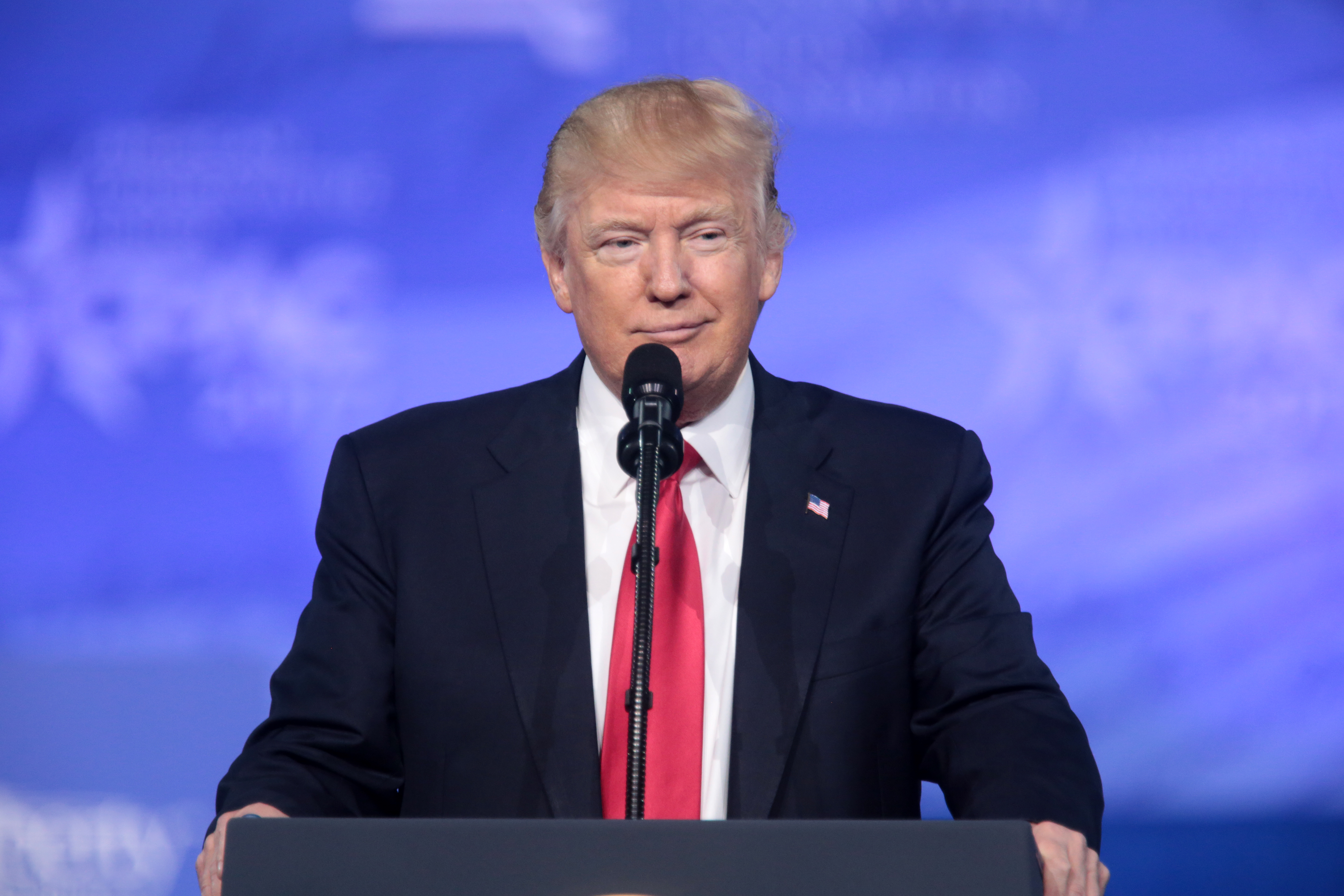
    Over the past decade, journalism has been going through an exponential business and technology shift. Starting in 2016, the press faced an additional challenge, Donald Trump. It may be hard for young journalism students to get some perspective here because 2016 may have been the first time many even had the right to vote. Regardless of politics, I think people on all sides of the aisle can agree Trump is unlike anything we’ve ever encountered. Whether you like him or not, Trump and his administration are forcing journalists to reconsider how they can best fulfill their roles as watchdogs.

    How do you keep up when today’s contradiction, controversy or scandal overshadows yesterday’s? In the past, journalists had more time to investigate and give context to a story because the news cycle wasn’t so short. Since 2016, it seems there’s a new lead story every day.

    This lecture will give a few pieces of background and tips for journalists on how to tell fact from fiction, how to hold the president accountable, and how to fairly serve their audience.

    Post-Truth

    In 2016, Oxford Dictionaries named “post-truth” the word of the year. If we are indeed living in a post-truth society, journalists must work even harder to objectively decipher “alternative facts” from falsehoods.

    Alternative Facts

    Many of Trump’s controversies in 2017 surrounded members of his own administration. Oftentimes they contradicted Trump’s own statements or tried to prove that Trump was correct after his statements were debunked.

    During an interview with NBC’s Chuck Todd Jan. 22, 2017, Trump senior adviser Kellyanne Conway made headlines for what she called “alternative facts.”

    For a little background about the press secretary’s controversial first day of the Trump administration, NPR explained what led up to Conway’s interview in Delusions Or Deceptions? White House ‘Alternative Facts’ Rile Press.

    Former Press Secretary Sean Spicer sparked the controversy during his first unofficial press briefing Jan. 21, 2017, when he claimed the inauguration was the most-watched ever “both in-person and around the globe.” Regardless of whether anyone cares about crowd size, the frustration grew when journalists showed proof that Spicer was incorrect.

    Deflection

    Conway deflected when questioned about the briefing the next day. Watch this short interview and consider whether alternative facts have a place in journalism. Also, pay attention to Todd’s question and interview style.

    Reporters must ask questions

    It’s crucial that reporters uncover facts by asking questions until they get an objective answer regardless of politics. It can be very difficult to interview people who don’t answer the question a reporter asks.

    Reporters will not only be faced with this challenge while interviewing political officials. Reporters will also have to repeatedly ask the same question during interviews with public information officials, or PIOs. Reporters may also have to be persistent while interviewing anyone who doesn’t answer a question. This may also happen when someone is nervous about being interviewed and they go off on a tangent.

    It’s a reporter’s responsibility to listen, and if the question is not answered, then they need to ask the question again.

    Accountability

    Spicer was correct to call out an erroneous tweet by a reporter. But the press was also correct to hold Spicer accountable. It would be much easier for all of us to see the real facts if the deflection and bickering came to an end. But this is the world in which we live now.

    For those of you who are curious what the truth was in regards to whether Trump’s inauguration was the most watch, Nielsen reported 30.6 million watched. Meanwhile, according to Nielsen, 37.8 million people watched President Obama’s first inauguration in 2009.

    How To Cover Trump Stories

    Journalists must avoid using subjective or bias language. It doesn’t matter if you’re working for an independent news organization, right or left. When the public is as severely divided as it is now, any subjective language will only serve to preach to the choir. You will alienate those who don’t want to believe you, even if what you’re saying is true. You will perpetuate the feedback loop that your audience is increasingly subjecting themselves to.

    • Be accurate.
    • Be objective.
    • Provide attribution to any claim to increase credibility and transparency.
    • Use data. Read CJR’s “Data empowers journalism independence in Trump’s era.”
    • Hold the powerful accountable by calling out any false or misleading statements.
    • Don’t get distracted. Don’t spend so much time on Trump that you forget your audience needs balance too. If you publish too much sensationalist Trump news, people may not listen when they actually need to.

    Trump on Twitter

    Staying focused on what’s important is easier said than done because Trump offends people so often it’s hard not to address his latest Tweet. By now we all understand Trump is offensive. Many of his supporters said they voted for him precisely because he didn’t feel the need to be “politically correct.” So who are we serving by doing wall-to-wall coverage on an offensive Tweet? Always ask yourself, is there a more important story or angle I should cover?

    Take this Tweet for example:

    What about this is important? Is it important that some felt this was an unprofessional and trashy thing for a president to tweet? Or is it important that some of Trump’s supporters may see this as a call to action against reporters? If you’re covering these types of Trump stories, remember why. Yes, they are newsworthy just because they trend and offend. But, you need to go deeper because this type of tweet from Trump is so common. Remember to focus your stories on impact, not clickbait.

    Listen to this interview that aired the next day on NPR’s On Point: “Trump’s Twitter Pummeling Of CNN.”

    Interviewing Trump

    The Poynter Institute published a list of suggestions for journalists covering Trump stories. It’s important for journalists to stay on top of new stories, but it’s also important not to forget past reports. Poynter identified many instances where journalists confronted Trump about false or controversial statements he made in the past. We must be persistent in our fight for accountability by not forgetting so soon.

    https://twitter.com/JNetAbrahamsen/status/893998161991266305

    Stay Informed To Catch Misleading Statements

    Journalists must be able to quickly recall information to arm ourselves with it, especially during live interviews. If a person you’re interviewing says something false on your air or stream, it’s your responsibility to correct them immediately.

    Need help improving your memory? I suggest taking online news quizzes every week. Forcing yourself to recall names, dates, numbers, and quotes will help make those more available to your memory. It will also make you feel more confident that you’re covering the story thoroughly and accurately.

    I encourage you to regularly listen to at least a few of these podcasts to keep you up to date on Trump related news:

    I suggest listening to news/podcasts when you drive, shop, run errands, exercise, get ready for work, clean, cook, etc. I listen to about four hours of news podcasts a day. I stream an additional three hours of live news. I spend about three hours a day reading the news. If you want to be a better journalist, learn to love it. If you become a better news consumer, you will become a better journalist. Check out the other five popular podcasts that will keep you conveniently informed:

    https://twitter.com/JNetAbrahamsen/status/896890196444274689

    Facts Are Facts

    No political party can claim their own facts. People can have their own opinions, but facts need to be facts for everyone. Journalists must analyze statements and report the facts regardless of their own political affiliation or political beliefs. That is where media ethics will do justice to the masses journalists serve.

    Propaganda

    What happens when people, especially powerful people, are allowed to create their own facts?

    Propaganda: information, especially of a biased or misleading nature, used to promote or publicize a particular political cause or point of view.

    Journalists must make sure our own words don’t become propaganda in the same way a political leader must be stopped from spreading propaganda. If there’s one thing we know for sure right now, it looks like the media and the new White House will be working very hard to hold one another accountable.

    For tips on how to fact check read 8 Ways to Spot Fake News.

    For a refresher on critical thinking, watch this simple video about how to identify your own bias and take the time to examine claims:

    Additional Resources

    Featured image Donald Trump by Gage Skidmore (CC-BY SA)

  • The Business Of Journalism And Why You Need To Care

    The Business Of Journalism And Why You Need To Care

    The future of journalism oftentimes seems pretty grim to the thousands of newspaper reporters who lost their jobs in layoffs this past decade. But there’s hope and lots of potential in digital innovation.

    That’s where you come in. You are responsible for the future of our business. But before you can start planning how the rest of us will consume media, you need to learn what happened in the past and how it’s affecting today’s journalism.

    John Oliver doesn’t claim to be a journalist. He’s a comedian and TV host. But perhaps we journalists have a lot to learn from his ability to break down important issues while making people laugh. Watch John Oliver’s tragically accurate and funny analysis on the media business.

    HBO’s “Last Week Tonight” also exposed media acquisitions in an episode on Sinclair Broadcast Group that aired July 2, 2017.

    Digital Casualty

    https://www.instagram.com/p/BKG1CZ6hpWW/?taken-by=jeanetteabrahamsen

    The closure of the Tampa Tribune hits close to home. The Trib was another casualty in the inevitable transition to digital news. But one very important thing to remember as we watch more newspapers close their doors in the coming years, this isn’t just a shift in platforms. We’re not only shifting from print to digital. The wake of mass layoffs will undoubtedly clear the path for more government corruption.

    Some newspaper journalists continue their investigative reporting for online publications. But at least in the near future, funding for investigations that hold the powerful accountable isn’t looking so great. Here are a few important articles you should read to understand what’s happening to newspapers and the journalism many unknowingly relied on:

    Why Should You Care?

    It’s important for young professionals just starting out in media to understand the business side of our business. I’m not showing you this to scare you, but to help you perhaps learn from the past, and help lay a more solid foundation for the future of journalism.

    Another quick note I feel obligated to share with you is to always be prepared to be laid off. I saw too may great people get laid off and locked out of their jobs in an instant. So make sure you’re prepared.

    • Always save your work on your personal computer, drive, or cloud.
    • Network with professionals outside of your company and help others get jobs so they’ll help you too if you ever need it.
    • Don’t wait until you’re laid off to ask for letters of recommendations.
    • Get certified. The Poynter Institute is one company that offers credible training and certification programs.
    • Always update your resume on LinkedIn and job sites like Glassdoor and Indeed.
    • Get a side job. Sites like FlexJobs offer great freelance gigs for writers and digital marketers that you can do while you have a full-time job if it’s not a conflict of interest.
    • Save money and don’t live beyond your means. The more money you save, the more options you’ll have. If you live extravagantly, you’ll be much more stressed out if the checks suddenly stop coming. Give yourself several months of cushion so you can make rational and responsible choices about your future, instead of desperately grabbing the first job that comes your way.

    Page One

    The New York Times is known around the world. But even one of the biggest papers in the world isn’t immune to change.

    Andrew Rossi directed the documentary “Page One: Inside the New York Times” about the inner workings of the New York Times and the tension between new and old modes of journalism. He spoke with the Center for Investigative Reporting about making the movie and the role investigative journalism plays in society.

    Related Video