Journalists optimize search engine results by putting the best keywords in headlines, the body of an article, and websites. SEO is becoming increasingly important to understand and use correctly. SEO can be complex, but you can easily improve your articles, blogs and social posts just by wording your headlines correctly.
As a journalist, you want your articles to be found by your readers. If people search for a topic on Google, you want Google to find those keywords and put your article high enough to make it on the first page of search result pages (SERPs). Most people never click past the first page of results, so good SEO is crucial to get more readers.
One of the difficult things about really mastering SEO is that it evolves quickly. Google changes its search algorithm hundreds of times a year. Even if you don’t delve into the details, you should still understand how and why search algorithms change. Take a look at the history of Google’s algorithm changes.
Your SEO improves when another person includes a link to your site or article on their page. This tells Google that your work is credible and that people want to share it. Linking to your own work is also helpful. For example, I wrote this SEO blog post on my website for broadcast news. If I were to tell readers on this page to check out my other article on blogging and web writing, then the backlink in the words “blogging and web writing” helps improve my SEO rating for this website.
Here are a few helpful articles to get you started so your social and digital content can be seen by a bigger audience:
A Web crawler is an Internet bot which systematically browses the World Wide Web, typically for the purpose of Web indexing. Web search engines and some other sites use Web crawling or spidering software to update their web content or indexes of others sites’ web content.
HTTPS (also called HTTP over TLS, HTTP over SSL, and HTTP Secure) is a protocol for secure communication over a computer network which is widely used on the Internet. HTTPS consists of communication over Hypertext Transfer Protocol (HTTP) within a connection encrypted by Transport Layer Security or its predecessor, Secure Sockets Layer.
Cloaking is a search engine optimization (SEO) technique in which the content presented to the search engine spider is different from that presented to the user’s browser. This is done by delivering content based on the IP addresses or the User-Agent HTTP header of the user requesting the page.
A meta description tag is a snippet of HTML code in a web page header that summarizes the content that is on the web page. The meta description is usually placed after the title tag and before the meta keywords tag.
Structured data refers to kinds of data with a high level of organization, such as information in a relational database. When information is highly structured and predictable, search engines can more easily organize and display it in creative ways. If you’re interested in web design, you can test your coding using Google’s Structured Data Testing Tool.
This is what header tags look like:
To become more familiar with web coding, switch your WordPress view to HTLM and compare it to your visual setting so see how it’s made.
There are many rules and tips to improve your web writing. The most important ones are to be clean, concise and simple. Don’t go overboard using semicolons and ellipses. Keep excessive punctuation to a minimum unless it greatly enhances your sentence. It usually won’t. Help your readers and yourself by writing short sentences that are easy to understand.
To make your blogs and web stories more user-friendly, make sure your paragraphs are short too. Start noticing how journalists format their paragraphs and pay attention to the number of sentences in an average paragraph. You’ll notice web paragraphs are much shorter than what you’re used to if you’ve been writing long essays for school.
Here’s a short video that explains a common mistake many beginning writers make when they confuse me, myself and I.
Poor grammar won’t only cost you credibility, it can also change the meaning of your sentence. Watch this video to avoid unintentionally misleading your readers with misplaced modifiers.
When you start writing, keep it simple until you learn how to properly use punctuation like semicolons. Once you’ve built a solid writing foundation, try elevating your writing with help from this video.
Use little tricks to make all of these rules easier to remember. Replace “who” with “he” and replace “whom” with “him” to test if you’re using the correct word.
Who =They, he, she
Whom=Them, him, her
Example:
“You can communicate this to your clients, to whomever.”
The correct use is “whomever” not “whoever” because “you can communicate this to them” sounds better than “you can communicate this to they.”
Example:
Who did this?
Whom did this?
“He did this” makes sense. You’d never say “him did this.” So the correct word is “who.”
Associated Press Style
Proper spelling and formatting will help your blog and web article gain credibility. You should use the Associated Press Style Guide for spelling, grammar and formatting guidelines. The University of South Florida created a helpful guide to style and usage that you can refer to when writing for the web.
AP style changes every year. Here are a few recent changes:
Percent sign– AP recently announced the percent sign was OK when used with a numeral.
Hyphens- AP removed the requirement to hyphenate many words: dual heritage No hyphen (a change in 2019 from previous style) for terms such as African American, Asian American and Filipino American, used when relevant to refer to an American person’s heritage. The terms are less common when used to describe non-Americans, but may be used when relevant: Turkish German for a German of Turkish descent. African American No hyphen (a change in 2019 for this and other dual heritage terms). Acceptable for an American Black person of African descent. The terms are not necessarily interchangeable. Americans of Caribbean heritage, for example, generally refer to themselves as Caribbean American. Follow a person’s preference. Asian American No hyphen (a change in 2019 for this and other dual heritage terms). Acceptable for an American of Asian descent. When possible, refer to a person’s country of origin or follow the person’s preference. For example: Filipino American or Indian American. Read more here.
Race- AP’s style is now to capitalize Black in a racial, ethnic or cultural sense, conveying an essential and shared sense of history, identity and community among people who identify as Black, including those in the African diaspora and within Africa. The lowercase black is a color, not a person. AP style will continue to lowercase the term white in racial, ethnic and cultural senses. We also now capitalize Indigenous in reference to original inhabitants of a place. These decisions align with long-standing capitalization of distinct racial and ethnic identifiers such as Latino, Asian American and Native American. Our discussions on style and language consider many points, including the need to be inclusive and respectful in our storytelling and the evolution of language. After a review and period of consultation, we found, at this time, less support for capitalizing white. White people generally do not share the same history and culture, or the experience of being discriminated against because of skin color. In addition, AP is a global news organization and there is considerable disagreement, ambiguity and confusion about whom the term includes in much of the world. We agree that white people’s skin color plays into systemic inequalities and injustices, and we want our journalism to robustly explore those problems. But capitalizing the term white, as is done by white supremacists, risks subtly conveying legitimacy to such beliefs. Read more here.
Here are a few common rules you need to know from the Associated Press Style Guide:
Dates In the body of your copy abbreviate only Jan., Feb., Aug., Sept., Oct., Nov. and Dec. Spell out all months when using alone or with a year alone.
Example:
Wrong: December 6th 2017
Right: Dec. 6, 2017
Example:
Wrong: Dec. 2017
Right: December 2017
Time Avoid redundancies like 10 a.m. this morning, 10 p.m. tonight or 10 p.m. Monday night. Use figures except for noon and midnight. Use a colon to separate hours from minutes:
11 a.m.
1 p.m.
3:30 p.m.
9-11 a.m.
9 a.m. to 5 p.m.
Not this:
11a
1 PM
1:00 p.m.
Numbers Most of the time, you should write out numbers one through nine then use numerals for 10 and higher.
Ages
Always use figures. The girl is 15 years old; the law is 8 years old; the 101-year-old house.
Use hyphens for ages expressed as adjectives before a noun or as substitutes for a noun.
Examples: He’s a 5-year-old boy. The boy is 5 years old.
Spacing
Only use one space after a period, not two spaces.
Single space sentences.
Use one space between paragraphs.
Do not indent the beginning of a paragraph.
Percent
Percent was written out “percent,” but the Associated Press changed this rule and now allows the % symbol.
Florida
Abbreviate Fla. in datelines only; spell out Florida in stories. FL is just a postal code and should only be used in addresses.
Datelines on stories should contain a city name, entirely in capital letters, followed in most cases by the name of the state, country or territory where the city is located. If the city is known to your audience, you do not need to include the state.
Quotes
Don’t separate the word “said” and the person’s name.
NO: “I’m amazing,” Jeanette Abrahamsen, queen of the world, said.
YES: “I’m amazing,” said Jeanette Abrahamsen, queen of the world.
Attribution goes no later than the end of the first sentence in a paragraph with quotes.
Each quote gets a new paragraph. Example:
Jones, the president of the club, said it will be some time before they do a more exciting event than the one this week.
“It was epic,” he said. “We never imagined it would be such a success.”
Direct Quotations
Surround the exact words of a speaker or writer when reported in a story:
“I have no intention of staying,” he replied.
“I do not object,” he said, “to the tenor of the report.”
Franklin said, “A penny saved is a penny earned.”
A speculator said the practice is “too conservative for inflationary times.”
Running quotations
If a full paragraph of quoted material is followed by a paragraph that continues the quotation, do not put close-quote marks at the end of the first paragraph. Do, however, put open-quote marks at the start of the second paragraph. Continue in this fashion for any succeeding paragraphs, using close-quote marks only at the end of the quoted material.
If a paragraph does not start with quotation marks but ends with a quotation that is continued in the next paragraph, do not use close-quote marks at the end of the introductory paragraph if the quoted material constitutes a full sentence. Use close-quote marks, however, if the quoted material does not constitute a full sentence. For example:
He said, “I am shocked and horrified by what happened.”
“I am so horrified, in fact, that I will ask for the death penalty,” he said.
Quotes within quotes
Try to avoid these because they can be difficult to read, but if you do use a quote within a quote you should alternate between double quotation marks (“or”) and single marks (‘or’):
She said, “I quote from his letter, ‘I agree with Kipling that “the female of the species is more deadly than the male,” but the phenomenon is not an unchangeable law of nature,’ a remark he did not explain.”
Use three marks together if two quoted elements end at the same time: She said, “He told me, ‘I love you.’”
Apostrophe in plural nouns ending in s: Add only an apostrophe: the churches’ needs, the girls’ toys, the horses’ food, the ships’ wake, states’ rights, the VIPs’ entrance.
Follow these long-established printers’ rules:
The period and the comma always go within the quotation marks.
The dash, the semicolon, the question mark and the exclamation point go within the quotation marks when they apply to the quoted matter only. They go outside when they apply to the whole sentence.
Television program titles
Put quotation marks around show only if it is part of the formal name. The word show may be dropped when it would be cumbersome, such as in a set of listings. Use quotation marks also for the title of an episode: “The Clean Room Infiltration,” an episode of “The Big Bang Theory.” Also: “NBC Nightly News,” the “Today” show, “The Tonight Show.”
Apps and websites
Names of most websites and apps are capitalized without quotes: Facebook, Foursquare, Instagram, Twitter.
Ask the Editor Frequently Asked Style Questions
This is from the Associated Press Ask the Editor, a forum on writing, style and phrasing issues that go beyond the pages of the AP Stylebook. AP editor David Minthorn fields questions of widest interest posed by subscribers to the online AP Stylebook. Here is a sampling of frequently asked questions, with examples of AP style used in answers.
Q: Why is atheist not capitalized while Catholics, Muslims, Buddhists, etc., are?
A: We follow Webster’s on that term, which is lowercase.
Q: Great Depression is capitalized and so is American Revolution. How about Civil Rights Movement?
A: AP lowercases civil rights movement.
• Dates, time, eras (July 4, 2008; 9 a.m.; the Great Depression …)
Q: When referring to a time span, I never know when to use a dash to separate the two times (ex. 2-5 p.m.) and when to use the word “to”?
A: 2-5 p.m. is preferred
Q: Should the names of decades be capitalized when written out?
A: Use Arabic figures to indicate decades of history: the 1920s, the ’80s …
• Figures, numerals, dimensions (7-year-old boy; three years ago; 1 percent; third grade; size 9; 6-by-8-foot rug; 5 ounces; 68,000-square-foot facility…)
Q: Is the age of an inanimate object expressed in numerals or spelled out?
A: Always use figures for people, animals and objects: 3-year-old house.
Q: In denoting area, which is correct for numbers under 10 — 5 acres or five acres?
A: AP uses the numeral for acres, even when less than 10, as a dimension: 5 acres.
Q: If we’re speaking about regions of the state, should it be South Louisiana, North Louisiana and Central Louisiana?
A: Lowercase the compass point – central Louisiana — unless it’s a widely known section, as in Southern California or South Florida.
• Grammar (essential vs. nonessential clauses; pronouns; subject-verb agreement …)
Q: I’m confused on the use of “that” and “who” when talking about groups.
A: Use “that” for a thing, “who” for the personal pronoun, although “that” also fits some human references
Q: For a subject/verb agreement, how should I treat “one or more features?
A: In this instance, use a plural verb.
• Formats (italics, lists …)
Q: My AP Stylebook always lists examples in italics, so it’s difficult to see if italics are part of the style. For example, are newspapers italicized?
A: AP doesn’t use italics in news stories. That includes newspaper names and magazine references. No italics. The stylebook uses italics for examples only.
Q: Is there a standard AP style for bulleted areas of text?
A: AP uses dashes, not bullets, for lists in news stories that follow a colon. After each dash, capitalize the first letter and use periods at the end of each section.
• Possessive versus descriptive
Q: A months confinement or a month’s confinement?
A: a month’s confinement, per the QUASI POSSESSIVES section of the “possessives” entry
Q: Veteran’s Benefits, Veterans Benefits or Veterans’ Benefits?
A: Veterans benefits, lowercase and not a possessive, is usually a descriptive term.
Q: Is clarity essentially the only rule determining when a serial comma should be included?
A: In a simple series, AP doesn’t use a comma before the last item. For a series of complex terms, though, use commas after each for clarity.
Q: What is AP’s style on the military’s don’t ask, don’t tell policy?
A: “don’t ask, don’t tell” policy.
• Singular/plural (collective nouns …)
Q: Do music groups take singular verbs, as do collective nouns, or plural verbs, as with sports teams?
A: AP Stylebook entry on “collective nouns” says band names take plural verbs. The Fantastic Shakers have won many awards
Q: Is it staff has or staff have?
A: Normally staff is a collective taking a singular verb,
• Spelling (one word or two; hyphenation; noun phrases; prefixes; suffixes)
Examples: boardroom; hot plate; fast-food; pressure washing service; co-founder; countrywide.
• Sports terms
Examples: strikeouts, scorecard, goal post, Home Run Derby, general manager (lowercase)
Q: Would “crew chief” and “team owner” be capitalized before a name?
A: AP lowercases those descriptive titles.
Q: Why is “doctorate in psychology” not capped, but “Bachelor of Arts” is?
A: As a descriptive term, doctorate in psychology is lowercase. Bachelor of Arts is capitalized as an academic degree, as are B.A. and Ph.D. See “doctor” for an explanation of Dr. as a title for medical doctor on first reference.
Q: Is the proper phrase “If money were no object” or “If money was no object”?
A: The phrase suggests a contingency unlikely to come true, so use “were” for the subjunctive mood.
Q: Is clarity essentially the only rule determining when a serial comma should be included?
A; Commas in a series are for clarity and prevention of ambiguities. In a simple series, AP doesn’t use a comma before the last item. If the elements are complex, uses commas for all.
Q: How do I deal with a vulgarity from a movie that is integral to the article I’m writing?
A: A partial spelling with hyphens in place of some letters would convey the meaning. AP flags such cases atop the story with an editor’s note.
• Online and technology (the web; the internet; URL; computers; e-commerce …)
Q: Others use one word for internet-related terms. How about AP?
A: AP style is email (changed from e-mail), but other e- words are hyphenated: e-commerce and e-book. Our amended style is website (one word, lowercase w), along with other compounds: webcam, webcast, webmaster.
Q: How does AP treat programming language when used in general text?
A: AP stories use PHP, Ajax, XML, FTP … search engine optimization … click-through rate … pay-per-click.
Q: How about using e- as a prefix for new terms in the tech and business worlds?
A: AP uses hyphenated e- for generic terms such as e-commerce and e-strategies. One exception: email (no hyphen, which reflects majority of usage). For company names, use their preference: eBay.
• News media (datelines; headlines; newswriting …)
Q: Which states are never abbreviated in datelines?
A: Eight states are never abbreviated in datelines or text: Alaska, Hawaii, Idaho, Iowa, Maine, Ohio, Texas and Utah.
Q: Do you capitalize a conjunction in a headline?
A: AP headlines cap only first word and proper names or proper abbreviations.
Q: If you have a hyphen in a headline, is the word after the hyphen capitalized?
A: In AP headline style, only the first word and proper nouns are capped.
• Other terminology (business; food and beverages; legal and justice; medical; ethnic and nationality; politics; religion …)
Q: When referring to your company in internal (or external) communications, which is correct: Corporate or corporate?
A: corporate (adj.) is lowercase.
Q: There seem to be differing opinions on whether or not to capitalize the names of grapes used to make wine.
A: AP lowercases wine varietals such as cabernet sauvignon and chardonnay, and caps regional names such as Bordeaux, Sauternes and Chablis.
Q: Should diseases also known by acronyms such as PTSD be capitalized?
A: Lowercase for post-traumatic stress disorder, or PTSD, hepatitis C, etc. See “diseases” entry for further guidance.
Q: If using “member of Congress” instead of congressman/congresswoman, should “member” be capitalized?
A: member is lowercase, as are congressmen and congresswoman. See the “legislative titles” entry for rulings.
What is newsworthy?
A newsworthy story should include:
Impact
Proximity
Timeliness
Community Interest
Conflict
Prominence
Novelty
Inverted Pyramid
To start writing your story, identify the most important stuff and put it first. The first sentence in your story is called the lead (also spelled “lede”). The lead should tell your readers why they should give you their time right away. Immediately answer “who cares?” Don’t bury the lead. This is particularly important for informational stories.
Narrative Storytelling
Narrative stories don’t always follow the inverted pyramid style. Listen to Lane DeGregory read one of her narratives. Pay attention to her word choice and the order in which she reveals details.
This week, I talk about zigging when others zag and following the ripples. https://t.co/zXE1H2Q1MT
You should use hyperlinks when you’re quoting a fact or something online. Always hyperlink to the original source of the information. Informational stories require hyperlinks to boost a writer’s credibility. That way, readers can check to see where the writer got the information from. This helps improve transparency and drives traffic to other pages, boosting search engine optimization.
Make sure your hyperlinks open in a new tab so your readers aren’t directed away from your page. When your page stays open in their browser, readers are more likely to return to your website after they check out your hyperlinked content.
Formatting
Here’s a generic formula for a traditional AP-style story.
DATELINE (city) IN CAPITAL LETTERS — Lead paragraph with the most interesting facts to catch a reader’s attention. (1 to 2 sentences)
Nut paragraph. What’s the point of this story? Why should I keep reading? (No more than 3 sentences)
Quote with emotion (No more than 3 sentences)
Paragraph with facts, attribution and hyperlinks to credible and original sources of information. Offer context to support quotes. (1 to 4 sentences)
Quote with emotion (No more than 3 sentences)
Paragraph with facts, attribution and hyperlinks to credible and original sources of information. Offer context to support quotes. (1 to 4 sentences)
Quote with emotion (No more than 3 sentences)
Paragraph with facts, attribution and hyperlinks to credible and original sources of information. Offer context to support quotes. (1 to 4 sentences)
Kicker quote with emotion to wrap up story (No more than 3 sentences)
NOTE: Web stories should be flush left with one space between each paragraph. Most full quotes should go on their own line (not inside of a paragraph).
Good blogs visually and functionally match their brand. Some themes lend themselves to video, while others are enhanced with tweets. Here are some ways you can make a blog more engaging to increase the chances of your readers clicking on, responding to, and sharing your content:
Embed YouTube videos
Embed Instagram videos & pictures
Embed Tweets
Embed Facebook posts
Embed polls
Embed graphs and infographics
Embed memes and gifs
Embedding is wonderful, but a good blog also needs more content to give context to the embedded media. This content should be well formatted to make it more convenient to read. This means you should avoid long blocks of text, and use short paragraphs, bullet points and numbered lists.
Here are some examples of different web formats in action.
Most journalists these days spend a lot more time aggregating content than actually creating it from scratch. You can simply share someone else’s article, video, tweet, etc. Or you can re-write it and turn it into your own news. Reading other people’s news also helps give you ideas that you can build on, then go out and shoot your own story. Either way, staying on top of news is a must if you want to succeed in a mass communication job like broadcast news, web, social, media marketing and promotions.
Here are some of the websites/social accounts I check:
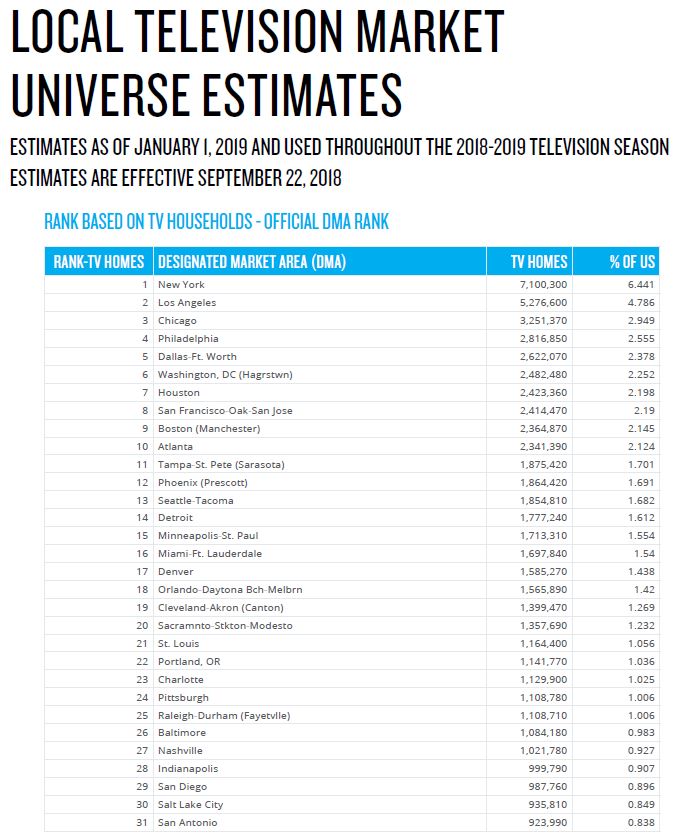
Nielsen is one of the widest used market research companies. Most TV stations pay Nielsen for daily ratings reports. Nielsen also determines DMA or market size.
Tampa Bay is now the 11th largest TV market in the country. These ratings can fluctuate year to year. For example, in 2017 Tampa was 13th.
The counties in our viewing area include:
Hillsborough
Pinellas
Polk
Pasco
Sarasota
Manatee
Some people in Citrus and Hernando can also watch our local programming.
Here is the list of the top 210 markets: https://www.nielsen.com/content/dam/corporate/us/en/public%20factsheets/tv/2018-19-dma-ranker.pdf
Working in media means more than knowing how to write, shoot and edit. There are many lessons you will learn when you enter the profession. But here are a few tips to help you along the way as you begin your internships and first jobs.
Don’t
Don’t be late. If you’re late or miss a meeting, make sure you’re sincerely apologetic and profoundly thankful if they’re willing to reschedule. Most people will write off even the most talented students or interns if they bail on them. Not respecting the value of other people’s time is a huge red flag and it will severely damage your chances of getting and keeping a job. People talk to each other in this business. If someone asks about you, don’t let the answer be that you don’t care and you’re rude because you think your time is more valuable. Not only is this important to your success, it also affects how willing professionals will be to help other students in the future. Unfortunately, I know many great media professionals who refuse to help interns because too many interns have behaved in such a way that they look ungrateful. If you ever insult or offend a professional who is helping you say, “I am so incredibly sorry. I know your time is very valuable and I sincerely hope you’ll accept my apology,” then do something to make it up to them so they know you won’t do it again.
Get to the point.Do not waste people’s time. For example: “Hello, I am writing to you in regards to…” I’ve already deleted your email. Get to the point because if you don’t, then people feel like you’ve disrespected their time. This rule is one of the most important in our business, both in your writing, and verbal communication. Being wordy is the easiest way to get people to not like you. In this field, people need to like you, or you’ll most likely not succeed.
NEVER ask someone a question that you can answer yourself on Google. If you ask for directions, an address, or contact information it may cost you a future job. Asking someone for something you should know how to find is the same as telling them you don’t have basic journalism skills, and/or you’re too lazy to open your browser so you will likely not be a hard worker. I’ve seen many managers refuse to speak to someone because of this.
Never use more than one question mark in a row. It comes off as hostile, overly aggressive, and disrespectful.
When you’re new, you will need help to get by. That’s great because it offers you opportunities to get to know people. But don’t only take. Give. Whatever that means, figure out a way to repay people who help you, either by helping them back, or giving them a token of appreciation. Sometimes that means a thank you coffee, baking cookies, staying late to help them wrap cables, running scripts, giving them story ideas, etc.
Don’t wait for people to tell you what to do. Jump in and figure out what people need help with, without always asking them. Take initiative.
No one is thankful for your content if they have to work for it. Always finish through and don’t put any work on anyone but yourself. Complete everything before you give it to someone to air or post. If they want to change it, they will. But don’t give them your rough draft or pieces. Every second someone else has to work for you, is an opportunity to push people away. So, work hard! This is an incredibly competitive field so if you want it, you must work for it.
Don’t reply all unless everyone needs to know what you have to say. People will dislike you if you constantly fill their email with reply alls. On the other hand, if everyone needs to know the information you have, make sure to send it to everyone. Don’t expect one person to relay your info.
Don’t get discouraged if it takes you a while to get a job. Most people apply to tons of places before they get a job. But, remember, the best way to get a job is to network. Spend your time networking instead of applying to 300 jobs.
Don’t forget that having a successful career starts with getting the job that’s best for you. That means your online presence needs to be on point so you don’t lose out on your dream job. Make sure your website is responsive. Always test your site on your phone and different computers and browsers. Maintain a professional presence on Facebook, Instagram, Twitter, YouTube/Vimeo and LinkedIn by posting all of your best work and posting often. Especially on Twitter, FB and IG, you should aim to post at least a few times a week. Posts should be of value.
Don’t post anything on social media that doesn’t make you look like a good hire. If you wouldn’t proudly show it off during a job interview, don’t post it. Your social media presence is a reflection of you and your value to a company. Don’t let your social media presence cost you opportunities.
Do
Treat your social media profiles like your resume.
Hustle all day every day. This industry is a lifestyle. If you don’t want to give everything to your career, find a different one where you can make more money per hour. You have to be passionate about this field to make it worth your time. Jump head first into everything and give it your all (yes even on weekends and holidays).
Treat your internship like a job interview. Managers there to test your worth, not teach you. Prove to them why they should hire you. Don’t assume people at your internship will train you. Many interns assume they have no responsibility and treat their internships like school. Don’t complain that no one is teaching you… that’s what teachers are for. You are there to provide the company value. In return, you get experience and networks. If someone decides to take time away from their work to help you, you should be eternally grateful. Most people are too busy to train you. You have to figure it out for yourself. TAKE INITIATIVE.
Help other people get jobs. Karma is huge in our business, so if you help other people succeed, you will also be helped when the time comes.
Compliment people who you notice do a good job. While you’re learning from others, tell them you appreciate learning from them. People are more likely to keep helping you if you tell them you recognize specificthings they do well.
Watch the station’s shows. Understand their brand. Be familiar with how many shows they create, what time they air, and know the names of all reporters and anchors BEFORE your interview.
Keep smiling. We are in a stressful deadline-driven business. Many people around you may have just returned from an emotionally draining murder scene etc. So don’t take it personal if people don’t always smile back. But do your best to spread positivity in your newsroom or office. It will help you get through a hard day. But it will also help you get promoted, and get other jobs in the future.
Respond to emails immediately. Make sure the people in charge are on your VIP list in your email so you get a push notification anytime they send an email. The faster you reply, the better your chance is of making a good impression.
Once you get a job, document everything. Keep track of your hours every day, and all the days you’re called into work on your day off. Expect to work way more than the hours you’re paid for. That’s just how it goes. But if it gets to the point where you can’t live with it anymore, then it’s helpful to have documentation ready. If you’re being harassed, save the text or email. Our business is filled with managers who break worker rights laws. Human Resources is not always your friend, so they won’t take your word for it when you need it. Protect yourself. Also make sure you document any deals or promises your manager makes with you. If a manager promises you a raise or promotion, get it in writing. There’s a high turnover rate in management, so you never know when your manager may quit or be fired.
When you get a job offer, don’t be so excited that you forget to read your contract. Many positions in our field will require that you sign a contract. Read it. You may also want to show it to a lawyer. Usually, newsroom positions come with contracts, while production jobs are hourly. Some contracts are insane and could force you to pay the company thousands of dollars if you quit, even if the reason is because you need to go home to a dying parent for example. I’ve seen people be tied up in $70,000 in debt after trying to quit a job before their contract is up. Contracts are very serious. Sometimes they can ensure that you get severance pay if you’re laid off. But mostly, contracts are more likely to hurt you if you don’t understand them. I’ve heard of some companies that will sue you if you get another job within six months after your contract is up (even if you leave on a positive note and do not terminate). Can you afford to not work for six months? Or are you willing to leave the viewing area to get another job? Do not sign a contract if you are not comfortable with the deal. You can tell a hiring manager that you will only accept a job if they adjust the contract. They may adjust the contract, or perhaps you won’t get the job. Either way, make sure that you know what you’re getting yourself into.
Some managers are great, others are not. Let the great ones inspire you, but don’t let the bad ones get you down. Remember you didn’t get into this field for them, so don’t do your job for them. Do it for yourself and the pride you have in doing a good job.
Go get what you want. Don’t wait for it to fall in your lap.
Editing is much more than learning how to use edit software. Editing is also about which choices you make to tell your story. These tutorials will walk you through how and why to make specific edits in Adobe Premiere Pro.
I created the following videos to show you how to edit two common video projects for TV news.
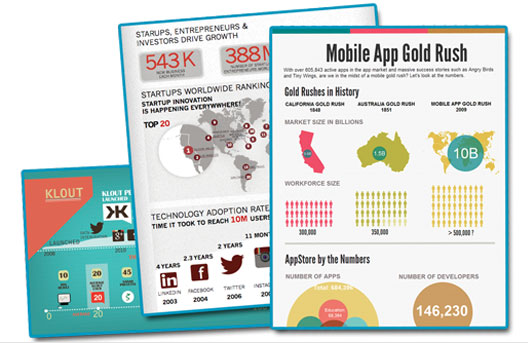
Making facts and numbers look good is more than just making it more entertaining to look at. When you turn information into infographics, your information has a greater impact and can be more clearly understood. Infographics also help when you don’t have specific video or pictures to include in your story.
Canva is a great tool to create infographics, posters, and slides for presentations. I suggest you check out their design school page to get inspired and find exactly what you’re looking for. Here’s a tutorial for beginners:
Pew Research Center
The Pew Research Center produces mass amounts of data. It turns much of that data into infographics and videos. Here’s an explainer of how random sampling works:
How can you use data as part of your research process? This next video shows you how to navigate one of the Center’s massive studies on America’s religious landscape.
News organizations rely on polls to gauge public opinion, but sometimes they’re wrong. Check out this next video that explains why polls did not predict the outcome of the 2016 presidential election.
Here’s one last video from the Pew Research Center that shows how you can combine data and multimedia to tell a compelling and informative story.
What’s it like getting to work in the middle of the night to anchor a morning newscast on one of the country’s biggest networks? Mode interviewed HLN’s Robin Meade about her job on “Morning Express.” Check out their behind the scenes video posted on Dec. 4, 2015.