The role of the media is to hold the powerful accountable because sometimes the powerful lie to the people. The point is to give a voice to the voiceless and to inform voters so they elect people who will serve their best interests. Though trust in the media is shaky, independent journalism is growing.
I.F. Stone was an independent investigative journalist and crusader for free speech. He published a newsletter called “I.F. Stone’s Weekly.” It exposed lies told by the government. It was regarded as some of the best journalistic work of the 20th Century.
To read about some of the government’s lies check out the Lies section on the documentary’s website.
The Fourth Estate
The Merriam-Webster dictionary explains the fourth estate this way:
It might be news to you that the term fourth estate has been around for centuries. In Europe, going back to medieval times, the people who participated in the political life of a country were generally divided into three classes or estates. In England they were the three groups with representation in Parliament, namely, the nobility, the clergy, and the common people. Some other group, like the mob or the public press, that had an unofficial but often great influence on public affairs, was called the fourth estate. In the 19th century, fourth estate came to refer exclusively to the press, and now it’s applied to all branches of the news media.
“The Agenda with Steve Paikin” hosted a discussion about “All Governments Lie” featuring some of America’s most influential independent journalists. This episode focuses on the failure of the fourth estate.
You can watch and listen to Amy Goodman’s show on democracynow.org. Here she is accepting the I.F. Stone Lifetime Achievement Award:
Here are some interesting articles about independent journalism:
Al Tompkins is a journalist and senior faculty at the Poynter Institute. He wrote the textbook, “Aim For The Heart.” In the following video, Tompkins highlights some elements from his book. He explains how to make your audience care and remember your story.
This is the tragic and inspiring story of “The Internet’s Own Boy.” Before he killed himself in 2013, Aaron Swartz was a child prodigy who helped create RSS, Wikipedia, Creative Commons and Reddit. In his 26 years on Earth, he fought harder for freedom of information than most journalists will in their entire careers.
Police arrested Swartz near Harvard University in 2011. A federal grand jury indicted the Stanford University student and Harvard research fellow on charges of wire fraud, computer fraud, unlawfully obtaining information from a protected computer, and recklessly damaging a protected computer. His crime? Downloading academic journals. Charges piled up. Soon, he faced 35 years in prison and $1 million in fines.
Swartz’s father told CNN his son would still be alive if he hadn’t been arrested. A year after Swartz’s suicide, filmmaker Brian Knappenberger released a free documentary online about Swartz’s incredible impact.
Before we watch the entire film, here’s a quick lesson on his contributions.
Reddit
RSS
Creative Commons
Watch the full movie here:
VICE interviewed the filmmaker for a podcast show. They discussed Swartz’s legal fight and the making of the documentary.
In 2002, The Boston Globe’s investigative team published about 600 stories on the sex abuse scandal surrounding the Catholic Church. The reporters accused nearly 250 priests and brothers of molesting children in the Boston Archdiocese. The Boston Globe believes there are over 1,000 sex abuse survivors in Boston alone.
In 2015, Open Road released the film “Spotlight.” I highly encourage anyone interested in journalism to watch the movie. It explores the process reporters go through to uncover information that powerful people spent decades trying to bury.
The film gave a voice to survivors. It warned those who commit and cover up atrocities that journalists will hold them accountable. It reminded other journalists of why they go to work every day.
The Boston Globe created a fascinating section on their website dedicated to the movie. Here, you can read stories by the real journalists and see how the movie was made.
Want to learn more about the Boston Globe’s Spotlight team? Watch this video to get a behind the scenes look at some of the most powerful investigative journalists in the world.
PBS News Hour aired a six-minute segment about the movie and the newspaper that won a Pulitzer Prize for its impactful reporting.
Boston’s PBS affiliate, WGBH, aired a discussion with journalists to find out what they thought about the movie and the future of journalism.
Photographers and videographers in any genre can learn a lot from food photographers. The good ones capture depth using lighting and focus. They get close enough to show texture. The next time you take a photo or shoot b-roll think about your depth and texture. Use light to make colors more vibrant. Don’t be afraid to get close.
Here are a few examples of composition, lighting, and angles in photos from my Instagram account.
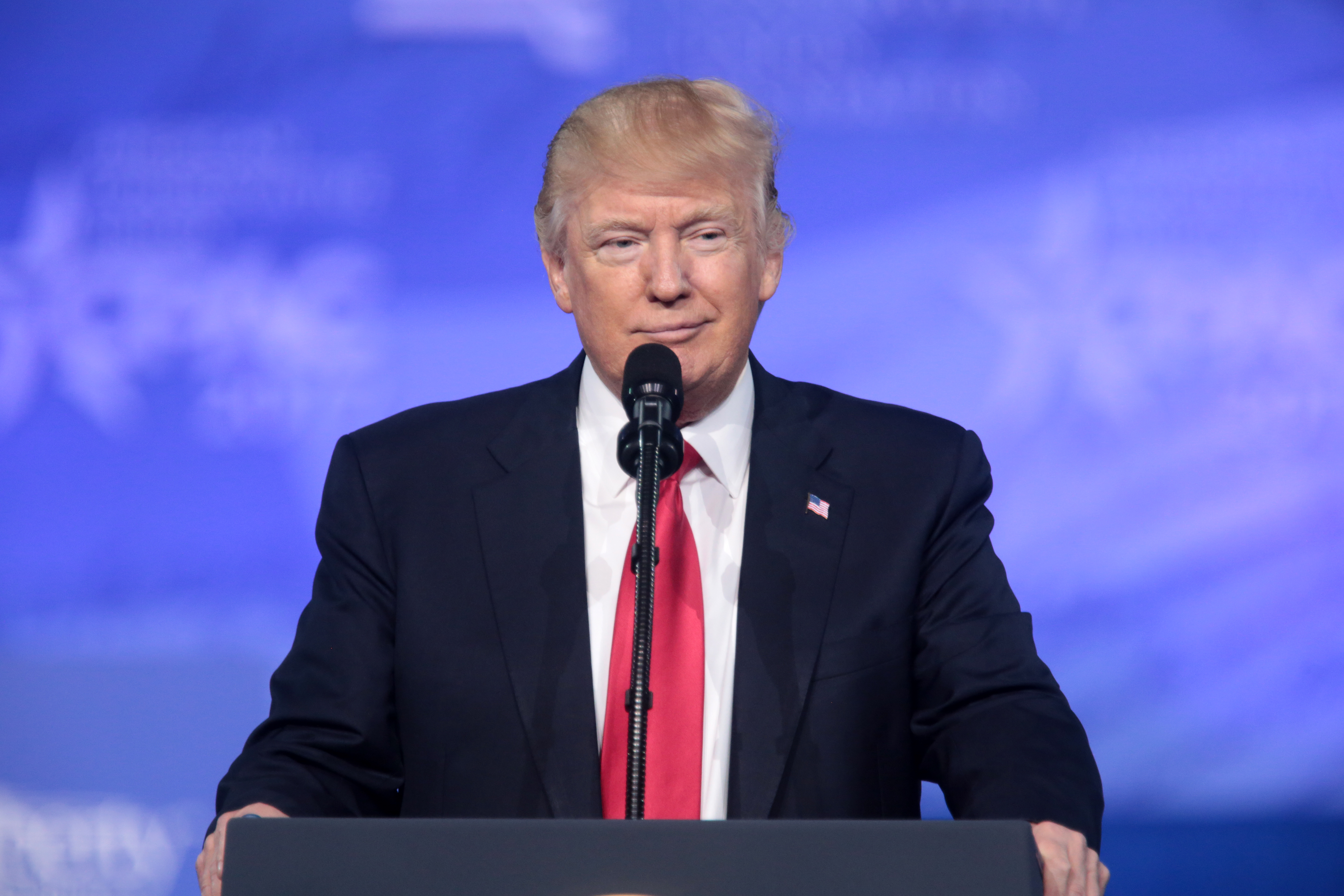
Over the past decade, journalism has been going through an exponential business and technology shift. Starting in 2016, the press faced an additional challenge, Donald Trump. It may be hard for young journalism students to get some perspective here because 2016 may have been the first time many even had the right to vote. Regardless of politics, I think people on all sides of the aisle can agree Trump is unlike anything we’ve ever encountered. Whether you like him or not, Trump and his administration are forcing journalists to reconsider how they can best fulfill their roles as watchdogs.
How do you keep up when today’s contradiction, controversy or scandal overshadows yesterday’s? In the past, journalists had more time to investigate and give context to a story because the news cycle wasn’t so short. Since 2016, it seems there’s a new lead story every day.
This lecture will give a few pieces of background and tips for journalists on how to tell fact from fiction, how to hold the president accountable, and how to fairly serve their audience.
Many of Trump’s controversies in 2017 surrounded members of his own administration. Oftentimes they contradicted Trump’s own statements or tried to prove that Trump was correct after his statements were debunked.
During an interview with NBC’s Chuck Todd Jan. 22, 2017, Trump senior adviser Kellyanne Conway made headlines for what she called “alternative facts.”
Conway deflected when questioned about the briefing the next day. Watch this short interview and consider whether alternative facts have a place in journalism. Also, pay attention to Todd’s question and interview style.
Reporters must ask questions
It’s crucial that reporters uncover facts by asking questions until they get an objective answer regardless of politics. It can be very difficult to interview people who don’t answer the question a reporter asks.
Reporters will not only be faced with this challenge while interviewing political officials. Reporters will also have to repeatedly ask the same question during interviews with public information officials, or PIOs. Reporters may also have to be persistent while interviewing anyone who doesn’t answer a question. This may also happen when someone is nervous about being interviewed and they go off on a tangent.
It’s a reporter’s responsibility to listen, and if the question is not answered, then they need to ask the question again.
Accountability
Spicer was correct to call out an erroneous tweet by a reporter. But the press was also correct to hold Spicer accountable. It would be much easier for all of us to see the real facts if the deflection and bickering came to an end. But this is the world in which we live now.
For those of you who are curious what the truth was in regards to whether Trump’s inauguration was the most watch, Nielsen reported 30.6 million watched. Meanwhile, according to Nielsen, 37.8 million people watched President Obama’s first inauguration in 2009.
How To Cover Trump Stories
Journalists must avoid using subjective or bias language. It doesn’t matter if you’re working for an independent news organization, right or left. When the public is as severely divided as it is now, any subjective language will only serve to preach to the choir. You will alienate those who don’t want to believe you, even if what you’re saying is true. You will perpetuate the feedback loop that your audience is increasingly subjecting themselves to.
Be accurate.
Be objective.
Provide attribution to any claim to increase credibility and transparency.
Hold the powerful accountable by calling out any false or misleading statements.
Don’t get distracted. Don’t spend so much time on Trump that you forget your audience needs balance too. If you publish too much sensationalist Trump news, people may not listen when they actually need to.
Trump on Twitter
Staying focused on what’s important is easier said than done because Trump offends people so often it’s hard not to address his latest Tweet. By now we all understand Trump is offensive. Many of his supporters said they voted for him precisely because he didn’t feel the need to be “politically correct.” So who are we serving by doing wall-to-wall coverage on an offensive Tweet? Always ask yourself, is there a more important story or angle I should cover?
What about this is important? Is it important that some felt this was an unprofessional and trashy thing for a president to tweet? Or is it important that some of Trump’s supporters may see this as a call to action against reporters? If you’re covering these types of Trump stories, remember why. Yes, they are newsworthy just because they trend and offend. But, you need to go deeper because this type of tweet from Trump is so common. Remember to focus your stories on impact, not clickbait.
The Poynter Institute published a list of suggestions for journalists covering Trump stories. It’s important for journalists to stay on top of new stories, but it’s also important not to forget past reports. Poynter identified many instances where journalists confronted Trump about false or controversial statements he made in the past. We must be persistent in our fight for accountability by not forgetting so soon.
Journalists must be able to quickly recall information to arm ourselves with it, especially during live interviews. If a person you’re interviewing says something false on your air or stream, it’s your responsibility to correct them immediately.
Need help improving your memory? I suggest taking online news quizzes every week. Forcing yourself to recall names, dates, numbers, and quotes will help make those more available to your memory. It will also make you feel more confident that you’re covering the story thoroughly and accurately.
I encourage you to regularly listen to at least a few of these podcasts to keep you up to date on Trump related news:
I suggest listening to news/podcasts when you drive, shop, run errands, exercise, get ready for work, clean, cook, etc. I listen to about four hours of news podcasts a day. I stream an additional three hours of live news. I spend about three hours a day reading the news. If you want to be a better journalist, learn to love it. If you become a better news consumer, you will become a better journalist. Check out the other five popular podcasts that will keep you conveniently informed:
No political party can claim their own facts. People can have their own opinions, but facts need to be facts for everyone. Journalists must analyze statements and report the facts regardless of their own political affiliation or political beliefs. That is where media ethics will do justice to the masses journalists serve.
Propaganda
What happens when people, especially powerful people, are allowed to create their own facts?
Journalists must make sure our own words don’t become propaganda in the same way a political leader must be stopped from spreading propaganda. If there’s one thing we know for sure right now, it looks like the media and the new White House will be working very hard to hold one another accountable.
The future of journalism oftentimes seems pretty grim to the thousands of newspaper reporters who lost their jobs in layoffs this past decade. But there’s hope and lots of potential in digital innovation.
That’s where you come in. You are responsible for the future of our business. But before you can start planning how the rest of us will consume media, you need to learn what happened in the past and how it’s affecting today’s journalism.
John Oliver doesn’t claim to be a journalist. He’s a comedian and TV host. But perhaps we journalists have a lot to learn from his ability to break down important issues while making people laugh. Watch John Oliver’s tragically accurate and funny analysis on the media business.
HBO’s “Last Week Tonight” also exposed media acquisitions in an episode on Sinclair Broadcast Group that aired July 2, 2017.
The closure of the Tampa Tribune hits close to home. The Trib was another casualty in the inevitable transition to digital news. But one very important thing to remember as we watch more newspapers close their doors in the coming years, this isn’t just a shift in platforms. We’re not only shifting from print to digital. The wake of mass layoffs will undoubtedly clear the path for more government corruption.
Some newspaper journalists continue their investigative reporting for online publications. But at least in the near future, funding for investigations that hold the powerful accountable isn’t looking so great. Here are a few important articles you should read to understand what’s happening to newspapers and the journalism many unknowingly relied on:
It’s important for young professionals just starting out in media to understand the business side of our business. I’m not showing you this to scare you, but to help you perhaps learn from the past, and help lay a more solid foundation for the future of journalism.
Another quick note I feel obligated to share with you is to always be prepared to be laid off. I saw too may great people get laid off and locked out of their jobs in an instant. So make sure you’re prepared.
Always save your work on your personal computer, drive, or cloud.
Network with professionals outside of your company and help others get jobs so they’ll help you too if you ever need it.
Don’t wait until you’re laid off to ask for letters of recommendations.
Get certified. The Poynter Institute is one company that offers credible training and certification programs.
Get a side job. Sites like FlexJobs offer great freelance gigs for writers and digital marketers that you can do while you have a full-time job if it’s not a conflict of interest.
Save money and don’t live beyond your means. The more money you save, the more options you’ll have. If you live extravagantly, you’ll be much more stressed out if the checks suddenly stop coming. Give yourself several months of cushion so you can make rational and responsible choices about your future, instead of desperately grabbing the first job that comes your way.
Page One
The New York Times is known around the world. But even one of the biggest papers in the world isn’t immune to change.
Andrew Rossi directed the documentary “Page One: Inside the New York Times” about the inner workings of the New York Times and the tension between new and old modes of journalism. He spoke with the Center for Investigative Reporting about making the movie and the role investigative journalism plays in society.
Fake news isn’t exactly new, but 2016 saw a historic rise in fake news as one of the most contentious presidential elections in history unfolded online and across social media platforms.
The increase is forcing journalists to shift their focus from uncovering and telling news stories to debunking fake news. The media is spending more time desperately trying to get get the public to understand what’s true and what isn’t.
So how do you separate truth from fiction? FactCheck.org explains how to spot fake news. I suggest you read the entire post, but here are the main takeaways journalists must understand:
Consider the source.
Read beyond the headline.
Check the author.
What’s the support?
Check the date.
Is this some kind of joke?
Check your biases.
Consult the experts.
Here’s How Fake News Works
How A Partying Macedonian Teen Earns Thousands Publishing Lies
The REAL News About FAKE News
Published on Mar 14, 2017
What is real news? What is fake news? How do we be smart about the media that we choose to consume? Tom Becka answers this important question in his TEDxUNO talk from February 18, 2017.
Tom Becka can be seen every night during Omaha’s Fox 42 News at 9 giving his unique views on what’s happening in Omaha and the rest of the world. His Becka’s Beat can be humorous, poignant, serious, or whimsical. But they are always informative, entertaining and on point. Becka’s Beat is also available on demand at Fox42 KPTM.com.
He is also a nationally-recognized radio talk show host currently heard Monday-Friday on legendary Kansas City radio station KCMO. Formerly of KFAB and KOIL in Omaha, Tom has been named one of the Top 100 talk show hosts in America ten times by Talkers magazine and one of the Top 25 local hosts in America by Newsmax magazine. He has also been a fill-in host for nationally-syndicated radio shows and on WLS in Chicago and many others.
He performed with such greats as Jerry Seinfeld, Lewis Black, Sam Kinnison, Darrel Hammond, Drew Carey.
This talk was given at a TEDx event using the TED conference format but independently organized by a local community. Learn more at http://ted.com/tedx
How Fake News Grows in a Post-Fact World
Published on Mar 9, 2017
As a journalist with extensive experience, Ali has had the opportunity to witness all forms of news. One type, in particular, poses a threat that has been exacerbated in our digital media society – fake news. Ali discusses the problems of fake news, how we are all affected by it, and how individuals can ensure the news they’re reading is rooted in fact, not fiction.
Ali Velshi is an anchor & correspondent with MSNBC. Most recently, he hosted “Ali Velshi On Target” on Al Jazeera America, covering the Presidential campaign, ISI, the refugee crisis, the Iran deal, Russia/NATO tensions, and Greece’s debt crisis, among other global affairs and economic issues. Before that, Velshi was CNN’s Chief Business Correspondent and authored two finance books.
Velshi has been nominated for three Emmy Awards and he holds a B.A and an honorary Doctorate from Canada’s Queen’s University. Velshi is a member of the Council on Foreign Relations and serves on the Boards of the X-Prize Foundation, Seeds of Peace, and the Chicago History Museum. He volunteers weekly with New York’s homeless outreach program.
This talk was given at a TEDx event using the TED conference format but independently organized by a local community. Learn more at http://ted.com/tedx
Truth Spreads Through Transparency
Nieman Lab published an intriguing article called, “With Open Notebook, Hearken wants to help news orgs do more of their reporting in public.” I highly encourage you to skim through this article to understand the collaboration now underway between journalists and readers to increase transparency. I suggest you watch this short video that walks you through how readers can help pitch and write news stories.
The USF library has a rundown about copyright and fair use. I highly encourage you to check out the library’s Open Use Media Resources Handout. This handout covers some copyright basics and lists websites for obtaining open use media resources for use in your projects.
How can you use copyrighted work?
You can link to the material. Linking to an image or public website is not copying. While you should still cite and give attribution to the owner of the website, it is not usually required to request permission to link to a publicly available website.
You can request permission from the copyright owner.
Requesting Permissions: Information on requesting permission to use copyrighted material including a request template.
You can use the work in accordance with an existing license. For instance:
The library negotiates licenses to online content that allows for classroom and reserves use.
The work may be issued under a creative commons license where the creator has clearly established what others can do with his work.
YouTube Creative Commons search https://www.youtube.com/
By appending the word “, creativecommons” (including the comma) to the end of your search term, you can filter for YouTube videos released with a creative commons license
Internet Archive https://archive.org/ Internet Archive is a non-profit library of millions of free books, movies, software, music, and more
What is the Public Domain?
The Public Domain is a state of belonging to the public as a whole and not being protected by copyright law. Works in the public domain are those for which copyright protection has expired, been forfeited or were inapplicable. They can be copied, distributed, performed and displayed without seeking permissions or applying to an exception under copyright law.
How and When to Attribute Creative Commons Content
Free music you can use in your YouTube videos, even videos you monetize
YouTube provides a free music library that you can use in your videos. Check out the library here and watch this quick tutorial:
Fair use on YouTube
YouTube provides lots of resources to help you understand what you can use. This is from YouTube’s Fair Use page.
Fair use is a legal doctrine that says you can reuse copyright-protected material under certain circumstances without getting permission from the copyright owner. Check out the videos below for helpful examples of fair use.
What happens if you post copyright material on YouTube?
Depending on where you post or broadcast your work, copyright infringement is treated differently. If your TV station subscribes to services like ASCAP you can pay to use copyrighted music. But if that contract only allows for you to broadcast the music, then YouTube may flag the song if you try to post it.
When YouTube finds copyright material in your video they may allow you to keep the post up, but perhaps the owner of that song may put ads on your video for example.
Here is an example of a video I posted that includes a song owned by J. Records. They are allowing me to keep the video up because they want to put ads on my video. That works fine for me because I’m not trying to monetize this video.
Other owners may decide to tell YouTube to remove the video from YouTube. You can file a dispute if you feel you are following copyright policies. If you file fraudulent disputes YouTube may terminate your account. So always make sure to back up your videos on an external hard drive or your computer.
22squared is a full-service, 100% employee-owned advertising agency with fierce beliefs and a unifying culture. With nearly 350 employees across two offices, our clients describe us as “happily feisty” because we work tirelessly to make them successful. We deliver amazing creative ideas, but we also get in the trenches with our clients, using strategic expertise and well-educated points of view to help them achieve their business goals.
We are a brand focused creative group that utilizes branded direct response, brand integration and traditional advertising methods to introduce product to market.
Our full-service video studio and soundstage offer everything you’ll need for a successful video or photography production in Tampa Bay. With a full array of lighting and grip equipment, audio gear, and camera rental packages, you’ll be well equipped to tackle any production need. Litewave Studios also features a sound booth on-site for voice over, a make-up room, and plenty of office and meeting space to complement the 1600 square foot cyc at our St. Petersburg video studio.
Storytelling is a timeless human activity. Before written words, people would shape cultures by telling elaborate stories full of morals and life lessons. At Three Chairs we continue to practice the art by crafting stories that visually captivate your viewers. We tell the stories of the things you are most passionate about – Your business, your products and your services. Strong creative, state-of-the-art production and YOU, our client. That’s Three Chairs Productions – So, pull up a chair and tell us your story.
We have collected the essential “Elements” that are required to identify and develop Brand Solutions into one unit, which works together seamlessly on a daily basis. By creating this in-house collective, we are able to create and execute every piece of the puzzle, rather than parceling out projects to extraneous partners who don’t know your brand, or goals, as intimately as we do. What this means to our clients is not only a campaign that cohesively solves business needs, but also makes the most out of our clients’ budgets. Brand Elements is the future of our industry and PP+K is leading the collective movement.
Where businesses, marketing departments and ad agencies come to get things done. We’re a talented group of people who bring a variety of skills but share a common goal: Create work that makes our clients and our moms proud.
At Connectivity Agency, we provide national strength with a localized approach to media. You WON’T get the same template for every market or a big call log of billable hours. You WILL get a customized approach that takes into account people still want to buy from brands they know, like and trust – what’s changed is how you connect to them!
Freelance Production Work
If you’re looking for flexible fast money and experience in a variety of production environments, I suggest you check out Staff Me Up. This site lists a variety of freelance production assistant jobs which are usually the most entry level. This is great for students who are still learning. It’s also a great way to fill up your resume. I worked on several different TV shows and music video sets while I was in college and it helped me network and learn a lot about different types of production environments.
My advice for freelance work:
No one is above getting coffee and taking out the trash.
A positive and energized attitude will help you get called back.
Don’t let your inexperience scare you into being quiet. Get to know people while you work, but don’t waste their time or your own time just socializing.
Pay attention to areas where you can help and don’t wait to be asked.
One of the best resources for job searches is Glassdoor. The app includes helpful pros and cons from employees so you get a better idea of what you’re getting yourself into. It also shows salary information for different positions.
Looking for jobs you can do from anywhere? FlexJobs posts remote positions that include part-time, full-time, contract and freelance. You can work from home to take care of family or work on the road if you travel a lot. This site isn’t free, but it’s worth the money if you subscribe for a few months.
There are many opportunities to work from home part-time or full-time. I suggest checking the job board on Freelance Writing Jobs.
Glass Ceiling is also a job search site. Their focus is helping women get equal pay. They feature successful professionals and resume tips.
My Media Jobs has listings of TV jobs across the country.
Journalism.com offers a ton of openings and also lists internships.
After you apply, don’t forget to reach out to the hiring manager to follow up on the status of your application and stress your interest in the role. Thank them for their consideration and get them chatting so they remember you. Oh and P.S. don’t forget to tell them your full name and what position you applied for.
Journalism isn’t going to make you rich unless you’re one of very few at the very top. You really have to love what you do because according to the Bureau of Labor Statistics, the median annual wage for reporters and correspondents was $37,720 in May 2015.The median annual wage for producers and directors was $68,440 in May 2015. Pay generally goes up when you work in bigger markets like New York and Los Angeles, but so do the hours. The region also plays a large role in what you can expect to earn. The southeast generally pays less than the west coast for example.
CNN reporters Clare Sebastian and Samuel Burke did a pkg on how to ask for a raise once you get the job you want. This was on Equal Pay Day so the focus was on how women can adjust their pitch to increase their chances of decreasing the pay gap. But, the advice is great for both men and women, especially if you’re new to the negotiating table.
Know a great place for media professionals? Please add it in the comment section.
Business Cards
I designed a really simple card in photoshop then uploaded it to VistaPrint. They printed it and sent it to my house. Or you can use their templates and images for your card. Either way, it’s important to always be ready in case someone asks for one.
Cover Letter Template
My Cover Letter
You should always start your cover letters with a specific reference to the job you’re applying for. Every cover letter should be a little different each time because it should be tailored to the requirements laid out in the job description. But you can create your own template that would go in the middle paragraphs. Here’s mine to give you an idea of what that would look like:
I earned my bachelor’s degree at the University of South Florida in broadcast news. I worked as a video lab assistant in the Mass Communications department. I was responsible for teaching students how to use camera and lighting equipment. I also helped students edit their video projects. At the same time, I worked as a videographer at the Museum of Science and Industry to research how people learn in engaging environments.
I then moved to San Diego where I produced news for an ABC affiliate. I was then offered the opportunity to build a television station from the ground up at one of the country’s most successful newspapers. I launched U-T TV, hired and managed 80 people, and oversaw a $5.5 million budget. I also trained the print sales and marketing department to sell and promote a wide variety of broadcast and digital programming. I assimilated 125 U-T San Diego print and digital journalists into broadcast platforms and directed an incredible innovation in media integration.
I returned to Tampa to be with my family in 2013. Though we are originally from Norway, this is the city we call home. I earned a master’s degree from USF St. Petersburg in digital journalism and web design to arm myself with the skills it will take to succeed in the quickly evolving media world.
From 2013-2016, I worked as a news producer at Tampa’s NBC affiliate WFLA and WTTA. I launched a weekend morning show, a Sunday morning political show, a Sunday midday show and an 8 p.m. nightly show.
I have been teaching at the University of South Florida as a broadcast news adjunct professor since 2015. I am incredibly passionate about creating engaging multimedia presentations to motivate and teach students.
Resume Example
Additional Resources:
Are you applying for internships and wondering how to actually get college credit for the internship? The process for registering for the internship course is outlined on this website:http://masscom.usf.edu/ug/intern/
The course is MMC 4945 Internship, but before a permit is given you must submit the paperwork and get approval, as outlined on the website listed above.
1 credit = 100 hours of work, 2 credits = 200 hours of work, and 3 credits = 300 hours of work over the course of the semester.
Popular ways to search for internships include the following:
*Remember that the department does not award retroactive credit; you must apply and register for the internship course prior to the start of the semester.*
Want a job in journalism? We ask our recruiter how to land an internship or full-time gig, on this week's WriteLane Lane DeGregory podcast: Episode 81 – Get a job https://t.co/mAwAcRzxkl