Author: JeanetteAbrahamsen

  • Mobile Storytelling

    Mobile Storytelling

    To view this as a Prezi, go here: https://prezi.com/view/kBRrgBXqjIU0L5JocihJ/ 

    If the pen was mightier than the sword, mobile phones are our atomic agent of change.

    In the past decade, mobile journalism exploded across the world following an increase in smartphone processing power and camera quality. The shift began when the first iPhone was released in 2007. Since then, Apple sold more than 1.5 billion iPhones. Android actually surpassed Apple. There are now more than 2 billion Android users worldwide.

    What is a mojo?

    A mojo is a new term for a journalist who uses a mobile device to tell stories. Mojos use their phones to record video and audio interviews. Some of them edit the media using apps like Videolicious and Adobe Rush. Others will edit on PCs.

    Mojos use phones to publish content to social media platforms and websites through apps like WordPress. Mojos can stream live. They can share 360 videos and photos using their phones and tablets.

    Why Mojo?

    Phones aren’t the only cameras improving in recent years. With fancy new cameras on the market, why would a journalist prefer using a cell phone?

    Speed

    Shooting and editing on a smartphone can take a fraction of the time. Many auto functions quickly reduce common errors like white balance, exposure and focus.

    If a photographer shoots a story on a traditional TV camera or a DSLR, it takes more time to set up. Then, the photographer usually has to eject an SD card and import the media onto a laptop. This process can eat up time in a breaking news situation where immediacy is key.

    Cost

    If you think your new iPhone is expensive, try buying a brand new camera and a lens. Nice cameras are expensive. Smartphones now record video in 4K so journalists on a budget don’t need to waste money on all the bells and whistles.

    Convenience

    Traditional TV news cameras and tripods are super heavy. You shouldn’t have to be in the best shape of your life to be a videographer. A cell phone is so lightweight that it doesn’t require a heavy tripod. Being a mojo means you can more easily travel and make your way around events like crowded rallies.

    Intimacy

    It’s not easy to create intimacy on demand with a huge camera in your face. Interviews with traditional video setups are intimidating and can make it more difficult for people to open up. A smartphone is less obtrusive and people are more familiar with them so they feel more comfortable in front of a cell phone.

    People feel so comfortable in front of cell phones that according to Rawhide, 93 million selfies are posted every day. That’s 1,000 selfies a second on Instagram.

    Video Example

    This is the first video created by a student who just learned how to shoot with her iPhone.

    Here’s another video created by a student:

    A student was able to tell this story from inside a march since she only had to carry a small cell phone.

    Professional MOJO Story Examples

    Mojo Leaders

    My favorite mojo leader is Yusuf Omar.

    A journalist working for Al Jazeera used a cell phone to discreetly shoot a documentary in Syria.

    NDTV recently swapped out all of their reporting and studio cameras for Samsung phones.

    The BBC is one of the biggest leaders of mobile journalism. They often offer tutorials for how others can join the mojo movement.

    Aspect Ratios

    Your cell phone may be set to capture photos in 4:3. But, you may want to switch it to 16:9 so it fills up the entire frame when the phone is held horizontally. Here’s what 4:3 looks like:

    img_3125
    4:3 ratio

    When someone looks at this with their phone turned horizontally, the phone will add black bars on the side like this:

    file.png

    Here is that same image in 16:9. This is best for broadcasting on TV, YouTube, Facebook posts and Twitter posts.

    16:9 ratio

    You should adjust your aspect ratio to fit the platform. For example, vertical videos are best for Snapchat, Facebook stories and Instagram stories.

    vertical

    To read more click here: How to View & Take Photos in Widescreen (16:9) on iPhone

    Framing

    During an interview, you want to give your subject proper lead room. This means they’re looking across the screen at the reporter. A reporter should maintain eye contact with the person they’re interviewing so they should stand on either side of the camera, not behind it.

    img_3152

    The following image does not have propper lead room. The negative space on the left creates awkward composition and makes the viewer feel disconnected with the person who’s speaking.

    img_3155.jpg

    This lead room isn’t bad, but there’s way too much headroom.

    img_3158.jpg

    Avoid shooting a profile of the person who’s talking because it’s hard for viewers to connect with a speaker if they can’t see their face. Make sure you can see both eyes of the person you’re interviewing to increase intimacy with your viewers.

    img_3157

    Lighting

    If you’re interviewing someone outside in the space below, you want to consider where the sunlight is shining to use the light to your benefit.

    img_3144.jpg

    You may be tempted to put the person you’re interviewing in the sun. Here’s why that’s a bad idea:

    • Direct sunlight makes people squint. The smaller the person’s eyes appear, the harder it is for your viewers to connect. They may also appear angry.
    • Direct sunlight casts harsh shadows under people’s noses. If they wear glasses, you’ll also create distracting shadows on their face.
    file-1.jpeg

    Think putting them in the shadow of a tree will help? It won’t.

    img_3135.jpg

    Instead, move the person into the shadow of the building to let your camera iris open up and absorb more detail of the person’s evenly lit face.

    img_3141

    Just make sure there’s no overexposed lit area behind them, or you will backlight your subject like this:

    img_3116

    Another common space to record interviews is in a room with a window. The window can offer a fantastic source of diffused natural light. But, you have to make sure the light hits the person’s face, not the back of their head or you will have too much backlight.

    img_3172.jpg

    If the window is behind the person you’re interviewing, the shot could end up looking like this:

    img_3170.jpg

    To avoid an overexposed background and an underexposed interview, just turn the person around so they’re facing the window like this:

    img_3167.jpg

    B-roll

    Your interview or reporter standup is considered a-roll. Supplemental footage to help tell your story is called b-roll. When shooting b-roll, variety is key. Get a wide variety of shots to show your story from different distances, heights and angles.

    Establishing or extreme wide shot
    Wide shot
    Close up
    Extreme close up
    Reflection shot
    Reflection shot
    Reflection shot

    When shooting b-roll or photos of people, try to get shots of eye contact, emotion, action and reaction.

    Reaction shot
    1918577_10156563588310121_8317585139873461212_n
    Action shot
    Over the shoulder shot

    Equipment

    In addition to a cell phone that shoots HD video, here are a few pieces of equipment I suggest investing in.

    Phones can shoot great video, but a simple lav microphone can really go a long way in elevating the quality. I like the Polsen MO-PL1 Lavalier Microphone for mobile. It’s $49.95 which is more affordable than most microphones but still produces great quality audio.

    lav mic

    Don’t have a headphone jack in your phone? A 3.5mm headphone jack adapter will run you about $16.

    lightning

    Shooting handheld can result in shaky video so try the lightweight Manfrotto tripod for $64.88.

    tripod

    To attach your phone to your tripod, you’ll need an adapter. I use the Vastar Universal Smartphone Tripod Adapter. You can buy it for $7.99.

    adapter

    An external battery pack is a lifesaver when you’re reporting from the field. The FosPower PowerActive Portable Battery Charger is water resistant and shockproof. You can pick one up on Amazon for $25.

    external battery

    You may also want to consider getting a gimbal to get stable shots on the move. You can get a Zhiyun Smooth Q on Amazon for $85.90.

    The newer Smooth 4 is $119 and should better handle heavier phones.

    How to record video stories on your cell phone

    Put your camera on grid mode to help with your rule of thirds.

    Using an iPhone:

    1. Click settings
    2. Click camera
    3. Slide grid to the right
    file-1 (1).jpeg

    If you’re using a newer iPhone, you may want to consider turning off Apple’s new HEVC format to record more compatible videos. Experts expect this format to become more common in the future, but there are still some issues editing high-efficiency video, specifically in Adobe Premiere Pro. HEVC is really meant for streaming video live, not editing it.

    To maintain a traditional video format:

    1. Click settings
    2. Click camera
    3. Click format
    4. Click “most compatible”
    file (1)

    Put your phone in airplane mode to ensure your interview isn’t interrupted by an incoming call.

    Make sure you have enough storage on your phone before you begin shooting. If you need more space, delete apps or videos that you don’t need. You can upload your content to the iCloud or get a free Google drive app to make more space on your phone.

    Tap on your screen to tell the phone where to focus.

    This will automatically adjust your camera’s iris to increase or decrease exposure.

    Your camera’s iris kind of works like the iris of your eye. When it’s too sunny, your pupils will get smaller. When it’s dark out, your iris will open your pupils to let in more light so you can see more details. Auto iris works like your eye.

    Tap and hold on the area of your screen that you want your viewers to focus on. This will lock your focus and exposure as you record.

    Then you can scroll up to increase exposure, or scroll down to decrease exposure.

    DON’T ZOOM. 

    Zooming with your cell phone will lower the resolution of your shot. Instead of zooming in, just move closer to whatever you’re trying to record.

    For the highest resolution, the person you’re interviewing should be no more than three feet away from the camera.

    If you don’t have enough natural light, turn on your cell phone light by pushing on the lighting icon in your camera’s video app.

    If you plan to be on camera for a reporter standup, avoid the urge to look at yourself. Instead, look directly into the front-facing camera lens.

    Spit that gum out. Chewing gum creates distracting noises and it’s not a good look if you’re on camera.

    Avoid plosives by moving the microphone away from your mouth. NPR has a great training guide to help you avoid common audio errors.

    Practice time. Hold your hand up in front of your face and say the words “Peter Piper Pizza.” Each time you say a word with the letter “p” air will hit your hand. If air hits your microphone this way, it causes a plosive sound. To avoid plosives, move your mic away from the airflow.

    Now what?

    When you’re done recording your video, you’ll either want to edit it on your mobile device or move it to a computer.

    Moving your video clips from your phone to a computer

    • If you have an iPhone and a Mac, I suggest airdrop or iCloud.
    • The free Google Drive app works great regardless of what type of cell phone or computer you’re using.
    • Just download the app on your phone, then upload all of your clips to your Google Drive.
    • You can download the clips from your Google Drive using a Chrome Browser.
    • After you download your videos, make sure you move them from the download folder into another folder where all of your clips will live before you import them into an editing software like Adobe Premiere Pro.

    Apps

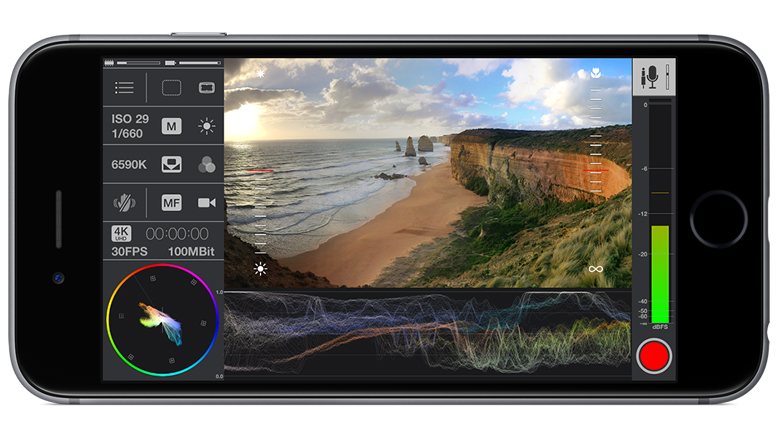
    If you want to shoot and edit all of your videos on your phone, there are several helpful apps.

    User Experience

    Mobile journalism isn’t just about how a journalist creates content. It’s also about how people consume it. Here’s an example of a story that was created for a cell phone. The user’s experience watching the story on their cell phone is more powerful than watching it on a computer because it turns the user’s phone into a refugee’s phone.

    Selfie Journalism

    Before the rise in smartphones, the average person couldn’t afford to tell their own stories. They didn’t have the equipment or the platform. Now, they can document revolutions and expose corruptions with their cell phones and a YouTube account. The role of a journalist is changing to help the public tell their own stories. Enter selfie journalism.

    We now need journalists more than ever. A journalist’s job is shifting toward curating, re-packaging and verifying content. Journalists can now tell more stories with the rise in user-generated content.

    Here are some examples of mobile selfie journalism stories.
    Extra Resources

  • Teases and Promos

    Teases and Promos

    Promos and teases entice viewers to watch by creatively showcasing specific nuggets of interesting information. Promos air during commercial breaks and are produced by the promotions department aka creative services. Teases air during a newscast before the commercial break and are produced by the producers. Reporters may also be required to shoot standup teases that producers will add to their newscast to promote a reporter’s story.

    Teases

    Promoting a story within a newscast is called a tease. A tease is usually two sentences.

    1. First sentence = context.
    2. Second sentence = a promise.

    Write your promise first, then write your first sentence. Promise a specific component of a story, not the overview. Never promise something in a tease that you won’t or can’t answer in the story.

    A tease airs immediately before a commercial break, during a newscast. Most traditional teases are read live by anchors (either as readers, VO’s or SOTVOs). But some are pre-produced like in my 8 p.m. show on WTTA.

    Here are some examples of pre-produced teases that I wrote and produced:

    Reporter Standup Teases

    Here are some examples of reporter standup teases.

    How to write a tease

    Don’t give the viewer the impression that you’re actively withholding information. If you can answer in a few words, you’re probably withholding. For example: Will it rain? Or, who won the game?

    • Give the impression that there’s too much to tell in one tease. Promise the more interesting details. Avoid obvious components.
    • Prove to your viewers you don’t have a tired story.
    • Pay special attention to lame “tip” teases. Lay out the specifics of an unexpected tip.
    • Instead of “We’ll give you five ways to save on your water bill”, try “how a simple device can save you $20 on your water bill.”

    Don’t use questions. Turn them into promises.

    • Question: “Where did a teacher’s aide take them?”
      Promise: “Where a teacher’s aide took them.”
    • Question: “Where can you find the best prices on school supplies?”
      Promise: “Where you can find the best prices on school supplies.”
    • Question: “How did the suspect get away?”
      Promise: “How the suspect got away.”

    Pick the teasable stories. Death is never easy to tease. Get to the point and hit them with best sound, best fact or best benefit. Avoid “we’ll show you,” “we’ll tell you” and “you’ll see.”

    Here are more examples of traditional tease scripts:

    SOME OF SOCCER’S MOST ELITE WOMEN ARE FILING A FORMAL COMPLAINT CHARGING U-S SOCCER WITH WAGE DISCRIMINATION.
    HOW LITTLE THEY MAKE, COMPARED TO MEN SOCCER PLAYERS.

    WILLIAM SHATNER IS FACING A ONE- HUNDRED- SEVENTY- MILLION DOLLAR LAWSUIT.
    THE FLORIDA RADIO HOST WHO CLAIMS SHATNER’S HIS FATHER.

    WHOOPI’S SELLING WEED.
    HER NEW VENTURE INTO MARIJUANA FOR WOMEN.

    JENNY FROM THE BLOCK’S STILL GOT IT.
    HOW MANY MILLIONS OF TIMES J- LO’S CARPOOL KARAOKE VIDEO WAS WATCHED IN TWO DAYS.

    BEYONCE FANS ARE CRAZY IN LOVE WITH HER NEW CLOTHING LINE.
    THE PERSONAL STORY BEHIND HER NEW BUSINESS.

    IT’S BEING CALLED THE *WORST ALLERGY SEASON EVER… BUT LOCKING OURSELVES *INDOORS MAY NOT BE THE ANSWER!
    HOW TO LOOK OUT FOR POLLEN INSIDE YOUR HOUSE.

    A WIDOW CLAIMS HER HUSBAND WAS A VICTIM OF ONE OF THE LARGEST CASES OF CONTAMINATION IN U.S. HISTORY.
    HOW SHE’S TAKING ON THE V-A.

    MARIAH CAREY’S DOING WHAT’S BEST FOR HER AND SHAKING OFF HER COMMITMENTS TO HER FANS.
    WHY SHE’S CANCELLING HER CONCERTS.

    ICE CUBE’S PICKING UP ANOTHER SOURCE OF CASH FLOW.
    THE NEW MUSICAL HE’S STARING IN.

    SHE DEVELOPED A LIFE-THREATENING HEART CONDITION AND MADE A MIRACULOUS RECOVERY.
    THE DEVICE THAT SAVED HER LIFE.

    A DISTRACTED SCHOOL BUS DRIVER’S IN A LOT OF TROUBLE THIS MORNING.
    COMING UP… WHAT SHE WAS CAUGHT ON CAMERA DOING WHEN HER BUS ALMOST SIDE-SWIPED A TRUCK.

    NEW CHIP CARDS ARE MEANT TO KEEP YOUR PRIVATE INFO SAFE FROM THIEVES.
    COMING UP AFTER THE BREAK… THE NEW PROBLEM THE CARDS COULD CREATE WHEN YOU GO SHOPPING ONLINE.

    A PRESCRIPTION FOR OLIVE OIL?
    HOW MUCH ONE DOCTOR SUGGESTS CONSUMING EVERY DAY TO LOSE WEIGHT AND LOWER YOUR RISK OF CANCER.

    A MAYOR IS BEING SUED FOR PAYING A FINE IN NICKLES AND DIMES.
    STILL AHEAD… HOW MANY THOUSANDS OF DOLLARS IN COINS HE FIT IN THIS VAN.

    Sports

    • Don’t tease the results of the game. Instead, tease the best moment from that game.
    • Clever is no substitute for solid coverage promises.
    • Make specific promises of specific coverage.

    Weather

    Teases should contain solid promises of unique coverage. Most weather teases promise blatantly obvious coverage I can get on any station.

    Weather should give time specifics, geographic specifics, effects on everyday life, causes behind a weather change, graphic specifics, or hardware specifics.

    Examples:

    • WILL THE HURRICANE IN THE GULF MAKE IT’S WAY TO THE BAY AREA THIS WEEKEND
    • HOW MUCH RAIN YOU CAN EXPECT IN YOUR NEIGHBORHOOD
    • WHAT PLANTS IN YOUR YARD DO YOU NEED TO PROTECT FROM TONIGHT’S FROST
    • WHEN YOU’RE GOING TO NEED YOUR UMBRELLA THIS WEEK

    Promos

    Promos promote a story on an upcoming newscast (called a topical) or a promo will promote an image or a talent (called an image promo).

    Here’s an example of an image promo that focuses on the look and personality of an anchor:

  • TV Newsroom Jobs

    TV Newsroom Jobs

    Every television newsroom is a little different depending on the market size, but here is an overview of the jobs at an average news station.

    Anchor

    Anchors are inside the TV studio. They read dozens of stories off a teleprompter, usually from the set. Some anchors ad lib more than others, but generally, they follow the rundown laid out by a producer from the top of the show until the very end. Anchors toss to reporters and meteorologists. An anchor may also report, but when they are reading stories in a show, they are called anchors.

    Anchors are paid to make it look like everything is going smoothly when it’s not. So it’s very important that an anchor knows enough about what’s going on so that they can keep the show going especially when the teleprompter fails, when news breaks, and when a live shot dies.

    anchors

    Rod Carter is one of the best anchors I’ve ever worked with. He is an incredible storyteller and genuinely cares about the viewers and people he interviews. Rod is great at ad-libbing and adjusting to unexpected changes during live newscasts. He also lifts everyone’s mood with his great sense of humor. USF students Sydney Whitfield and Laurentz Gilmore created this video about his impact on the community:

    Want to be an anchor? Practice reading off a teleprompter as often as possible. There are many apps and computer programs you can use. Here are a few of them:

    Reporter

    To become an anchor, most people must be reporters first. Reporters generally earn less money than anchors. Reporters must pitch story ideas. A producer, executive producer, assistant news director or news director will assign the reporter to their story every day. Reporters must find contacts and conduct interviews. Reporters are now being increasingly required to shoot and edit their own stories. Some reporters even have to do their own live shots. Reporters must also write web stories and tweets. Some must also shoot and post videos about their stories to social media. Reporters are usually outdoors during their live shots, or on location at a place relevant to their story.

    reporter

    WFLA Senior Investigative Reporter Steve Andrews is one of the best reporters in the nation. I had the privilege of working with him at Tampa’s NBC affiliate. In addition to being incredibly kind and helpful, Steve is a tough and hard-working journalist who everyone should learn from. Steve’s reporting won him seven Emmy Awards and recognition from the Investigative Reporters and Editors Association. I highly suggest you read his articles, listen to his scripts and watch his interview style.

    Here’s a short video with Steve’s great advice for journalists to always question what you hear.

    Samuel Burke is one of my favorite international and bilingual reporters who does a great job thinking of active and creative stand-ups. He also enjoys experimenting with social media and tech.

    MMJ Joe Little is recognized across the country for his creative stand-ups:

    Here’s an example of an active live shot by reporter Paul Mueller:

    Meteorologist

    Meteorologists usually report the weather from in studio on the green screen. Occasionally producers will put their meteorologists outside, but most of the time they are inside. They study the atmosphere and predict changes in temperature, precipitation, wind, waves, etc. They create graphics which they use during the broadcast and post online.

    weathermanweather woman

    Sportscaster

    Sportscasters usually report and anchor the sports news. Nowadays, they are one man bands. They produce, write, shoot, edit and go on air, both on location and in studio. They attend mostly local sports games but occasionally travel with teams.

    sports

    News Producer

    News producers read and watch news all day long so you don’t have to. A news producer’s job is to save a viewer time by consuming all the news of the day and choosing which stories are the most important. News producers boil curated content down into concise scripts, then add some context for their newscasts.

    A news producer is also called a line producer when they booth the newscast live. Producers are in charge of their own shows, usually 30-minutes or one hour each. Producers choose which stories will air depending on each show’s brand and demographic. That usually depends on what time the show airs. Producers decide what order stories air in and how many seconds each story deserves. Producers can write local, national and international stories.

    They also decide how the story will be presented (VO, VOSOT, WHIP, PKG, Reader, Graphic, etc.). Producers order or create their own graphics and find video to go with each story. Producers may have writers or associate producers who help them complete the show. Producers directly report to Executive Producers.

    During the live newscast, a producer will adjust for breaking news, and communicate any changes. They also communicate with live reporters, photographers, and directors to get the show from beginning to end with everyone on the same page. Producers add or kill stories depending on what time the show ends, so they get the show out at the correct time.

    If you want to be a news producer you will usually start out as a writer or an associate producer. There are also segment producers depending on the station.

    If you want to be a producer you will need to be good at:

    • understanding current events and the context that makes them important to viewers (aka news judgment)
    • writing news scripts, teases & headlines very quickly
    • spelling & grammar
    • clearly delegating tasks and remembering to check if those tasks were completed on time and correctly. The better a producer communicates the better their team will be. For example, if a producer includes specific time codes (in and out) for every sot (and b-roll) their editors will save time and have better direction. If a producer includes specific and accurate source instructions for every video, their editors can spend more time making the videos look good, and less time searching for the video. Another example of a good producer is one that ensures all slugs match. Many bad producers don’t pay attention to slug consistency. This wastes a tremendous amount of time, creates frustration for everyone, and makes it more difficult to find archived video and scripts.
    • quickly adding and subtracting time under pressure
    • staying calm under intense pressure
    • planning ahead to avoid potential problems
    • juggling many conversations at the exact same time, listening to several people talking and listening to air at the same time as you speak to others and possibly write and/or do basic math.

    FullSizeRender

    Director

    Directors in automated shops will code a producer’s shots as designated on the rundown. Ignite is a common automation system that helps reduce the number of people needed to run through a live show. Director code will tell the system, like Ignite, when to open an anchors microphone. It will tell the system when a story is a VO, graphic, live shot, etc. If the shop is not automated, directors will live punch each shot on the rundown. They may also run the audio board depending on whether the station uses a separate audio engineer.

    image1 (1)

    Satellite ENG Coordinator

    Live shots and video come through the “sat room.” Coordinators tune in live shots by finding the coordinates of any live truck. They may also tune in live shots from across the country. They also send and receive video files via FTP. The use of mobile devices like LiveU and TVU units means more stations can connect to any station’s sat room from anywhere.

    FullSizeRender (2)

    Floor director

    A floor director makes sure anchors are moving to the correct location designated by the producer’s rundown. Floor directors follow the rundown and show the meteoroligist the countdown given by the producer over their headset. Floor directors help make sure anchors look at the correct camera. If there are guest interviews on the show, they also help mic them up and put them on set at the correct time.

    Screen Shot 2016-02-07 at 5.55.11 PM

    Camera Operator

    News camera operators either physically pan, tilt, zoom, and focus by hand, or use robotic cameras inside a studio. Camera operators follow the producer’s instructions on the rundown to frame up the different shots for any given story. During the live show, the director may tell the camera operator to adjust their shots. Camera operators may also work outside if a set is in the feild, but they are generally stationary where a videographer is expected to walk around scenes and drive to different stories every day. Camera operators usually shoot full segments or shows on set, while videographers will physically go shoot specific stories.

    Videographer

    Videographers will usually shoot many stories in one day. Before a videographer goes to a scene or interview, they will be assigned a specific location and time. They will also be told how much to shoot based on what the story will be used for. Some days they shoot enough for a package, other days they’re just spraying the scene of a crime for a quick VO. Most videographers also edit. If you’re interested in being a sports videographer, I encourage you to read 7 things you never knew about being a sports camera operator.

    Editor

    Editors usually spend their day in a small edit bay, or at an editor station. They receive instructions on what video to edit, how to edit it, and where to push it. Sometimes the video goes to air, other times it goes to web, or FTP for a video share. Some editors spend their entire day editing one package, while others spend their time editing promotional material. Others edit dozens of VO’s and VOSOT’s for live newscasts. They must edit under tight deadlines and feed in video before it’s air time.

    edit bay

    Assignment Editor

    Assignment Editors gather information by reading press releases and listening to police scanners. They put any newsworthy events on calendars and help prepare for the editorial meetings by coming up with reporter/photographer assignments. They help hold editorial meetings by telling producers and managers which news stories we can cover on any given day. They also do beat checks and keep in touch with law enforcement to help get breaking news to the producers. They also run background checks on suspects and gather information that may help producers or reporters do their jobs more efficiently. Weekend assignment editors may also have to post web stories and videos.

    FullSizeRender (3)

    Web Producer

    Web producers populate a station’s website and social media platforms. They gather news from the internet and help post local stories. They write breaking news push alerts, Tweets, and Facebook posts. They also look for trending stories and communicate interesting stories to producers.

    FullSizeRender (1)

    Executive Producer

    Executive producers supervise line producers. They have oversight of news stories from each show and communicate information and changes to producers so everyone is on the same page. There are usually three executive producers in each station (overnights, dayside and nightside). They communicate with the reporters and help decide whether a reporter will switch stories and/or shows. They also read through producers’ script to look for any errors or suggest improvements.

    Assistant News Director

    Assistant News Directors supervise Executive Producers. There is one Assistant News Director at each station. They communicate any major changes to executive producers and producers. They usually spend half of their time helping executive producers, producers, anchors and reporters, and the rest of their time reporting to the News Director. Some Assistant News Directors help with budgets, hiring and staffing issues. They also communicate with the sales and marketing teams.

    News Director

    A News Director largely deals with budgets and improving revenue sources. The News Director should lead the stations branding and make sure the editorial content is consistent. News Directors decide when to spend money on new equipment and/or staff, or when to fire people.

    General Manager

    A General Manager oversees all operations at a station. Occasionally, they also oversee several stations at once. A general manager will communicate with other stations which share the same owner. Most stations are owned by big companies like Scripps, Media General, Gannett, etc.

    There are more jobs like engineers, tech support, marketing, sales, promotions, etc.

    Here’s an interesting article about newsroom job staffing: http://rtdna.org/article/rtdna_research_newsroom_staffing

  • Criminal Justice & Institutional Injustice

    Criminal Justice & Institutional Injustice

    Institutional injustice stems from hundreds of years of bias against people based on things like their race, ethnicity, gender, sexual orientation, gender identity, education and lack of wealth.

    Journalists should strive to make our country more just. Journalists hold powerful people accountable so they can’t use their status and money to create an unfair advantage. Since America is a capitalistic society some inequality is seen as “fair.” Sometimes a person’s achievements can be credited to their hard work. But oftentimes, an American’s success was earned off the backs of those who were systematically held down. To accurately report on our society, journalists must understand where different types of inequality come from.

    Today, we’ll take a look at just a few of the common misunderstandings in our society and criminal justice system.

    Can a race be won fairly if it was rigged from the beginning?

    Mass Incarceration

    America’s mass incarceration problem is growing fast. The NAACP’s Criminal Justice Fact Sheet points out some alarming numbers. Here are just a few:

    • Between 1980 and 2015, the number of people incarcerated in America increased from roughly 500,000 to over 2.2 million.
    • Nationwide, African American children represent 32% of children who are arrested, 42% of children who are detained, and 52% of children whose cases are judicially waived to criminal court.
    • African Americans and whites use drugs at similar rates, but the imprisonment rate of African Americans for drug charges is almost 6 times that of whites.

    You can’t talk about mass incarceration without talking about race. The Prison Policy Initiative looked at data from the following sources to show just how unequal America’s incarceration rates are.

    Data sources:

    White Black Hispanic
    U.S. population 62.1% 13.2% 17.4%
    Jail incarceration 47.4% 35.4% 14.9%
    State & federal incarceration 33.6% 35.4% 21.6%
    Life sentence 33.4% 48.3% 14.4%
    Life without parole sentence 33.5% 56.4% 7.4%
    Death row population 42.5% 41.7% 13.0%

    FL_Rates_2010.png

    NATO_FL_2018.png

    In 2016, the Prison Policy Initiative estimated that in the United States, about 2,298,300 people were incarcerated out of a population of 323.1 million.

    The United States has the largest prison population in the world and the highest per-capita incarceration rate, according to World Prison Brief.

    Visually (http://Visual.ly) facilitated the creation of this video. http://youtube.com/kurzgesagt created the animation. The Prison Policy Initiative helped conduct research and fact-checking. (http://www.prisonpolicy.org).

    VICE’s Justice series examines the winners and losers of the for-profit criminal justice system. Imprisoning people for being poor has technically been illegal in this country for two hundred years, but it is still a reality. Municipalities with small, low-income populations and correspondingly low tax bases regularly pay their salaries, and pad their budgets by issuing “quality of life” and traffic fines to people for minor offenses—and sending them to jail if they can’t pay.

    In part two of VICE’s investigation into modern-day debtor’s prison practices, we explore the phenomenon of private probation companies. To avoid paying for probation services, thousands of courts currently outsource probation to for-profit companies which charge people exorbitant fees for their own probation. Failure to pay is treated as a violation of probation, punishable by jail time, which extorts cash from already-struggling people.

    Voting Rights

    In November 2018, voters in Florida passed Amendment 4, restoring voting rights to one million ex-felons (people convicted of murder or felony sex crimes did not regain their right to vote).

    In 2016, more than 418,000 black people out of a black voting-age population of more than 2.3 million, or 17.9 percent of potential black voters in Florida, had finished sentences but couldn’t vote due to a felony record, according to the Sentencing Project.

    What Journalists Should Cover

    If all of this upsets you and leaves you feeling overwhelmed and powerless, don’t get discouraged. There are things you can do as a journalist to inform the public about what’s happening so they can vote for people who serve in everyone’s best interest.

    Here are two phenomenal investigative infotainment episodes of “Last Week Tonight with John Oliver.” The first one explains how prosecutors and plea deals work, or rather, don’t work.

    This episode shows us how powerful our elected officials are. When was the last time you saw a story about an attorney who was running for office? There are simply not enough journalists dedicated to covering these powerful people who often get away with murder while the media focuses on bigger races like senator and governor. You can take a stand in your newsroom and do some digging so your audience can actually make an informed decision about the names at the bottom of their ballot.

    Let’s Talk About Privilege

    As a journalist, you can’t cover injustice without understanding privilege. We’re all privileged in one way or another. But I’m talking about systematic privilege, specifically white privilege. If you’re a white journalist, do you understand your own privilege? Will you use your privilege for the greater good?

    It’s discussion time. We’re going to listen to a song and some podcasts. We’ll then discuss how we can fairly and accurately report on people with different ethnicities, races and religious backgrounds.

    Acknowledge your own privilege and then do something about it.

    Let’s listen to this Macklemore song and discuss what it makes you feel. Does this make you feel heard? Hopeful? Guilty? Upset? Why?

    Make newsrooms look like the communities they cover.

    Newsrooms are still much whiter than their readers, viewers and listeners. Yes, white people can and must cover minorities. But acknowledging your privilege will only take us so far. We need to improve hiring practices so our journalists, and managers, actually represent the people.

    New Report Examines Diversity in America’s Newsrooms

    Listen and discuss: https://www.wnycstudios.org/story/how-diverse-are-americas-newsrooms/ 
    https://www.wnyc.org/widgets/ondemand_player/wnycstudios/#file=/audio/json/857275/&share=1

    Tanzina Vega: ‘Change Is Happening’ In Newsrooms

    Listen and discuss: http://www.wlrn.org/post/tanzina-vega-change-happening-newsrooms

    Additional Resources

  • Want to succeed? Do this.

    Want to succeed? Do this.

    1. Take initiative and push yourself harder. DON’T BE LAZY.
    2. Be nice.

      Your classmates and I will help you get paid to do a job you love. Treat this class as a professional environment. People are watching the way you behave. If you act right, it will help you for years to come. If you’re a jerk, people won’t help you succeed.
    3. Never ask me (or anyone else) anything you can easily find on Google like event details, addresses, contact info, hours of operation, etc.

      It’s super rude to waste people’s time because you’re too lazy to check your own phone.
    4. Show me your videos as soon as you shoot so I can give you advice on how to make your project amazing (be warned this may mean re-shooting your video so don’t wait until it’s too late). When I give you feedback in person, take notes. Don’t come back later and tell me you forgot everything I said.
    5. Subscribe to the Zimmerman School Digital Network at USF on YouTube. Watch the videos, like, share and tag. Helping your classmates = good karma. Want views and likes on your own videos? Start by supporting your classmates and soon your analytics will grow organically.
    6. Follow me on Twitter and read everything I post (at least skim the headlines) @JnetAbrahamsen. Subscribe to my lists for story ideas.
    7. Follow @USF_ZSAMC on Twitter. Follow your classmates on Twitter, then like and share their posts.
    8. Follow usfzschoolmc on Instagram.
    9. Don’t post anything on social media that you wouldn’t show a hiring manager during a job interview. DELETE anything that doesn’t make you look like a reliable, trustworthy and credible worker.
    10. Download news apps and allow push notifications.
    11. DO NOT VIOLATE COPYRIGHT LAWS.
    12. Write like a human. Just because you’re in college doesn’t mean your writing should be arrogant. You’re writing for the masses, not an academic journal. Use simple words well.
    13. Kill it on all of the photography/videography basics like the rule of thirds. Don’t ever accidentally over backlight an interview. Don’t shoot in the shadow of a tree. Shoot an extreme number of extreme close-ups.
    14. Try out digital media apps that make it more efficient to create cool videos, images and graphics.
    15. Use YouTube’s free music library (and properly attribute songs in your video descriptions)
    16. Learn new (and modern) video effects, transitions and text animation in Adobe Premiere Pro. Here are some tutorials.
    17. Use free After Effects templates to elevate the quality of your videos. Motion Array is my favorite. There are free and paid templates.
    18. If you’re going to be on camera, be creative and active.
    19. Get certifications using your FREE LinkedIn Learning account.
    20. Check out free equipment at the CIS video lab.
    21. Don’t forget extreme close-ups. Like LOTS of them. Always shoot more b-roll than you think you need because not all of it will be amazing.
    22. Ask yourself, “would I watch this if it wasn’t mine?” If not, try harder.
    23. Follow the rules until you’re good enough to break them.
  • Story Ideas

    Story Ideas

    Not sure where to find good story ideas? This post is for you!

    what impact are you trying to make?

    Stories should inform your audience so they can make better decisions. Stories should raise awareness and empathy. How will you use your platform?

    Instead of only focusing on problems, look for opportunities to showcase solutions to empower your audience to make their communities better. Solutions journalism takes a basic story one step further by showing how people are addressing common problems. This requires understanding context and patterns. Most stories are part of a larger issue.

    Examples

    The refugee crisis can seem so big and overwhelming. Instead of desensitizing your audience by only showing huge refugee camps, you can humanize refugees by interviewing one of the kids integrating into a new culture by riding bikes with them. Show them as people who are just like you and me.

    Here’s a great example of how Yusuf Omar showcased people cleaning up their community. These positive stories perform way better online because people are more likely to share uplifting stories than depressing ones. Focus on solutions.

    Child labor is a huge problem that often goes uncovered. Here’s how he turned a problem into a solution. He showcased a shelter that helps former child laborers learn English and self defense:

    Instead of only reporting on homelessness, teach your audience about resources. Where are the local shelters? Did you know there are many parking lots where homeless people can sleep safely in their cars? How can your audience donate money, clothing, or time?

    USE TWITTER LIST TO SAVE TIME

    I use Twitter lists and Tweetdeck all the time to find story ideas more efficiently. The great thing about Twitter lists is that you can make a bunch of different lists for different reasons. For example, I made this beat check Twitter list to help Florida Focus students find news of the day in the Tampa Bay area.

    I found local officials and government organizations like the Tampa Police Department and Hillsborough County. These are great sources of information and media that our news outlet can publish.

    For Hashtag Our Stories, I created this Twitter list. Hashtag Our Stories is very different than Florida Focus. For one, Florida Focus is a local news program that airs on TV, while Hashtag Our Stories is a global social media outlet. The target audience for Florida Focus is an older person who watches PBS. Whereas the target audience for Hashtag Our Stories is 13-24 year olds who use Snapchat, Instagram and Facebook for positive stories about people changing their communities.

    You can create a Twitter list by clicking “lists” on your Twitter profile. This is for desktop, but you can do the same on the mobile app.

    Then click the “create new list” button in the top right.

    You should name your list something specific so you can organize them. If you plan on making your list public, a specific name will also help others who subscribe to your list.

    Once you’ve created your list, you can add relevant accounts by typing in handles in the member search.

    After adding members, you can easily scroll through all of their tweets in one place.

    Then, you can take it one step further and view your lists in TweetDeck for super efficient Twitter account and hashtag monitoring.

    Check out these tips from npr

    https://training.npr.org/2015/10/20/9-types-of-local-stories-that-cause-engagement/?utm_source=npr_newsletter&utm_medium=email&utm_content=20190416&utm_campaign=training&utm_term

    USF Story Ideas

    Many USF departments and colleges also have compelling content on their social media platform that can inspire great story ideas.

    Tampa Bay story ideas

    You can use events to spark ideas for stories you’d like to turn into a feature. Instead of covering the event itself, consider the stories inside the event. What’s the organization hosting the event? Who are the people attending the event? Do they have compelling stories your audience would be interested in? Is there a larger story that’s bigger than the event itself?

    For example, February is Black History Month. You could find a Black History event and develop an evergreen story idea out of that event instead of just covering what’s happening that day.

    • Is there a relevant event you can attend where you can shoot b-roll and find people to interview about why we need to recognize this month?
    • How has education changed in local black communities in the past few decades?
    • Perhaps you can feature an inspiring person who is making a big impact on their community.
    • You could feature a black-owned business that’s a staple in the community.
    • Perhaps you can look at the increase in hate crimes these past couple of years and do a data journalism story?
    • What can your audience do to promote racial justice?
    • Explain the new gentrification in Tampa Heights.
    • Which judges are perpetuating the cycle of unjust sentencing? What should your viewers know about these judges before they vote?

    There are stories everywhere waiting to be told. Let an event be a starting point, then take a few more steps, do a little more research, and find an angle you’re passionate about.

    Try National Health Observances: https://www.welcoa.org/health-observances/

    You can also find many timely holidays and observances at the United Nations: https://www.un.org/en/sections/observances/international-days/

    Please bounce ideas off me or let me know if you have any questions.

    I also encourage you to develop story ideas using these resources:

    Featured image credit: USF

  • Resumes, Cover Letters and Reels

    Resumes, Cover Letters and Reels

    Cover Letter

    • Always include a cover letter. Many managers won’t look at your resume or application without a cover letter.
    • Don’t bury the lead! Tell the manager IMMEDIATELY what job you’re applying for and why they should hire you.
    • Be concise. The manager is judging you by your writing ability regardless of what job you’re applying for. Keep it short.
    • A single typo may cost you the job so proofread like 20 times, step away and proofread again after a few days. Then do it again.
    • Format your cover letter properly. One page only. Most cover letters should follow traditional formats, but you may want to be creative depending on where you’re applying. Ex: applying for BuzzFeed? Write a listicle and SEO headline to match their branding.
    • The hiring manager isn’t looking to help someone who needs a job. It’s your responsibility to tell the person reading your cover letter why they need you. They don’t care about what you want. Their job is to make money. How will you make them money? 
    • They also probably don’t care about your childhood because they’re running a business, not a daycare. Don’t tell them what you’ve dreamed of becoming ever since you were a kid. It’s cliche and off putting.
    • Never write “I believe.” Are you the best or not? They don’t care if you believe you’re a great fit. Are you the best… or not? If your cover letter doesn’t exude confidence, start over and do it right or you’re wasting your time.
    • Add references at the bottom. Include their name, title and contact information.
    • Proofread again.
    • Don’t be overly formal, you’ll sound young and inexperienced. Don’t call people “Mr.” or “Ms.”
    • No one wants to read your essays or your thesis. Unless you’re applying to work at a college, work examples means content that will help the manager see what type of worker you will be. You won’t write a thesis at your news job so leave that out and focus on relevant examples like websites, articles, videos and infographics.
    • Follow every single application instruction precisely. This is a test. It’s usually pass or fail.
    • I never had a news/TV boss who cared about my GPA or the classes I took. They want links to videos, articles, Twitter followers, number of tweets, analytics, anything that will make them money. Quantify your skills.

    Here are two different example cover letters. This one is generic:

    Jeanette Abrahamsen cover letter example.jpg

    This one is for a specific job:

    March 12, 2019


    University of South Florida
    Zimmerman School of Advertising & Mass Communications
    4202 E. Fowler Ave.
    Tampa, FL 33620

    Dear Search Committee,

    I am writing to apply for the Instructor I position at the Zimmerman School of Advertising and Mass Communications. I could not be more grateful for my time as a visiting instructor and adjunct professor at the University of South Florida. I would love to become a permanent member of this team so I can continue to invest in USF the way USF invested in me. USF propelled me into a career where I climbed higher than I thought possible. I want to give my students the skills and determination to do the same.

    While earning my bachelor’s degree in broadcast news, USF gave me a platform to air my stories in one of the country’s biggest TV markets. This gave me a tremendous head start. It allowed me to pursue my dream of working in San Diego, America’s 28th largest TV market. I started working at the ABC affiliate, KGTV, as an assignment editor. I published stories on 10News.com and was promoted to write and line produce live TV newscasts.

    My executive producer was so impressed with my work ethic and enthusiasm that he offered me a life changing opportunity when he became the news director at the San Diego Union-Tribune, then known as U-T San Diego. I was his first hire. He and I built a TV station from the ground up. He originally hired me as an executive producer but quickly promoted me to be the assistant news director. I hired 80 people and oversaw a $5.5 million budget. I developed and launched 13 news, entertainment and sports programs. I collaborated on a redesign of the website to launch a livestreaming player. During my tenure, U-T TV won nine regional Emmy Awards.

    Throughout this incredible experience, I realized that one of my favorite parts was teaching more than a hundred print journalists how to tell stories using new tools and techniques. I helped hard working storytellers keep their jobs because they could now report for web and social media using their cell phones. Mobile journalism was just beginning to emerge. In the six years since, technology has advanced at a tremendous rate, and so has my passion for innovating our industry.

    This passion drove me back to USF so I could get my master’s degree in digital journalism and design. While earning my degree at USFSP, I became a producer at Tampa’s NBC affiliate. Because of my experience creating programming, I was responsible for developing and launching five newscasts for WFLA and WTTA.

    I now use my strong ties to local media outlets to give back to my students. Several times a year, I host events with the Tampa Bay Association of Black Journalists and help my students get internships, scholarships and jobs. I collaborate with Hillsborough County to publish student stories on HTV and online. My Advanced Reporting class works with Tampa’s NPR affiliate to produce award-winning shows. My students help create and promote the Florida Focus brief that airs on WEDU.

    As a visiting instructor, I have been charged with reworking our digital media curriculum by innovating several journalism courses. I am in the process of building a new digital network for the university where students, staff and faculty can publish and discover multimedia content. My meetings across campus have led to exciting collaborations that benefit our students.

    In addition to teaching video, writing, web design, social media, broadcast news and reporting, I pride myself on showing students the future of media. I take my students to virtual reality studios so they can experience the power of immersive 360 storytelling. We collaborate on social media and augmented reality projects with the Innovative Education Department and the Honors College. I also partner with some of the biggest innovators in journalism like Yusuf Omar who won the world’s first ever Snapchat award for helping rape survivors spread awareness while maintaining anonymity and authenticity.

    The teaching website I built on WordPress is JeanetteAbrahamsen.com. You can also see examples of my work on my YouTube channel www.youtube.com/user/AbrahamsenJeanette. I am so proud to be part of a massive transformation happening at USF right now. I greatly appreciate your time and consideration.

    Jeanette Abrahamsen

    Resumes

    • One page only (a CV can be longer if you’re applying for an academic or health job, for ex).
    • Put your name, phone number, email address, website URL, Twitter handle and YouTube channel at the top of the page.
    • Reverse chronological order (most recent stuff goes on top).
    • Use keywords the manager put in the job listing. Most employers don’t actually read all resumes submitted for a job opening. Some managers will only look at the top 10 percent that scored highest on keyword automation. This is why a Word doc is so important. Some software won’t properly identify keywords in a PDF.
    • Tailor each one of your resumes to fit the job you’re applying to.
    • You can make a pretty resume for the interview, but for the application, submit a traditional Word doc so you ensure the computer software properly scans it.
    • Don’t be wordy. Don’t use complete sentences. Use bullet points. If you use periods at the end of your sentences, make sure it’s consistent.
    • Don’t waste your space with an objective.
    • Proofread again.
    • Keep it short.
    • Your skills section should be a list of the equipment and software you can use like WordPress, Adobe Premiere Pro, etc. Don’t add things like Word because that’s like writing that you know how to turn on a computer.  If you list it, make sure you actually know it. Think you can speak Spanish because you got a B in seventh grade? Your boss might make you do a report in Spanish on live TV, so think twice before adding it to your skills.

    Here’s an example:

    jeanette-abrahamsen-resume

    Here’s what my resume looked like when I was a senior at USF getting my undergrad degree:Jeanette 2009 resume jpg.jpg

    Demo Reels

    Depending on the job you’re applying for, managers may ask for your reel. These are the most common types of reels:

    • Reporter/Anchor reel
    • Producer reel
    • Videographer/editor reel

    A reporter reel should start with the very best (most creative/active) stand-ups. Stand-ups should be about 5-10 seconds each, edited quickly back to back for about a minute or two. If you have anchor desk videos, you can add a few seconds of those, just make sure the best are first. If you have lots of stand-ups and lots of anchor desk video, you can also cut a separate reel for each. After the stand-ups, you should add your very best pkg (the entire pkg). Then add your second favorite pkg after that so the hiring manager can scroll through video from one URL.

    A producer reel is a short montage of your best shows like a bunch of little trailers back to back. Some managers don’t want to watch producer reels. They’re more likely to ask for several A-blocks so they can judge stacking, pacing, story choice, flow, writing, etc.

    Here’s an example of my old entertainment reel:

    A few years back I stopped making producer reels. Instead, I submit a YouTube playlist for my newscasts like this:

    That way I can tailor the playlist to the specific job. Looking to hire me to work at the Food Network?

    How about a health show?

    Need a promo producer? I’m your gal:

    Or, are you just looking for a producer to drive ratings with teases and good opens?

    Another less traditional option is an “about me” video that starts like a reel like this:

    While we’re here, let’s check out how I customize my YouTube channel to increase my chances of getting a good job: https://www.youtube.com/user/AbrahamsenJeanette

    Videographer and editor reels

    Website Portfolios

    https://jordonjmyers.com/

  • 10 Helpful Headline Tips To Catch People’s Attention

    10 Helpful Headline Tips To Catch People’s Attention

    1. The first headline writing tip is to start with the number 10. Starting with a numeral increases your chances of getting clicks.
    2. Numbered lists are more likely to get clicks too because readers know what they’re getting themselves into.
    3. Tell your readers why they should care right away. Always answer “so what, who cares?”
    4. Deliver. Don’t promise a story in a headline if you don’t deliver it in the copy. Make sure your headline accurately represents your story. Otherwise, it’s considered clickbait.
    5. Use keywords related to the topics in your story to boost your search engine optimization.
    6. Write 25 versions of your headline and pick the best one. It takes time to write a good headline. Prioritize this process and you will write better headlines.
    7. Use powerful and emotional verbs.
    8. Use active voice, not passive.
    9. Headlines with approximately six words tend to earn the highest number of clicks (between 35 to 60 characters, spaces included).
    10. Use a compelling featured image that reinforces your headline’s message. Headlines with images are more likely to catch people’s attention.

    Free Headline Analyzer

    There are lots of free headline analyzers you should test your headlines in. I suggest trying CoSchedule. Note: It’s nearly impossible to get a headline score of 100. Anything over 60 is usually good. Use their tips to test out different headlines for the same story.

    Screen Shot 2017-09-24 at 1.31.10 PM.png
    Courtesy: CoSchedule

    Screen Shot 2017-09-24 at 1.21.28 PM.png

    Screen Shot 2017-09-24 at 1.19.15 PMScreen Shot 2017-09-24 at 1.19.32 PM

    guide-how-to-write-catchy-headline.jpg

    Which headline would you be more likely to click?

    headline kneeling

    Buzzsumo looked at headlines online and on social platforms. Check out their report called, We Analyzed 100 Million Headlines. Here’s What We Learned.

    Here are a few interesting takeaways from their report:

    TopHeadlinePhrasesTopPhrasesStartingHeadlinesheadline_words_engagementsTopNumbersUsedInHeadlines2

    Related Resources:

    8 headline tips to draw readers on social media

    https://twitter.com/JNetAbrahamsen/status/903967436524924928

  • Robot Reporters, Artificial Intelligence, and Mixed-Reality Storytelling

    Robot Reporters, Artificial Intelligence, and Mixed-Reality Storytelling

    Robot reporters aren’t coming for all of your jobs just yet. But, it’s important to understand how automation is affecting journalism now. You should also start understanding how mixed-reality technology can help you tell stories in an immersive and impactful way.

    Artificial Intelligence and Fake News

    Instead of being scared of this inevitable innovation, you should learn how to use automation to make your job more efficient. Automated data analysis may give you more time to delve deeper and report on context.

    But, you have to be careful, AI can make it much harder to tell truth from fake news. Watch this PSA comedian Jordan Peele made with BuzzFeed using Adobe After Effects and the AI face-swapping tool FakeApp.

    This should serve as a reminder to always question something before you share it.

    Augmented Reality Storytelling

    Some TV news stations are starting to incorporate mixed-reality storytelling onto their sets to help visualize stories. Journalists should stay on top of these innovations to better learn how to tell stories in new ways. Mixed reality shouldn’t just look cool, it should be used intentionally. Take a look at how these stations strategically use augmented reality.

    Augmented reality is proving to have a much greater effect on viewers. It’s literally helping save people’s lives. Journalists are constantly warning people to evacuate during hurricanes. A nine-foot storm surge doesn’t sound that bad. But, when people see what that really looks like in AR, they’re more likely to take the warning seriously.

    USF’s Innovative Education department is using augmented reality to tell engaging stories like this:

    360 Storytelling

    Frontline took mixed-reality storytelling to the next level by incorporating 360 cameras. They published a guide for best practices that explains how mixed reality is evolving.

    360 can be particularly powerful because it can be used with virtual reality headsets. When people wear these headsets, it immerses them into another world. Transporting viewers in this way has the power to dramatically increase their empathy and compassion.

    16237219524_348f9088c9_z.jpg
    Woman Using a Samsung VR Headset at SXSW by Nan Palmero (CC BY)

    Here are some examples of the videos they created using 360 cameras, augmented and virtual reality.

    Artificial Intelligence Reporting

    Some outlets are using new technologies to program “robots” to write news articles.

    When Journalism Meets Technology

    Joshua Benton, director of the Nieman Journalism Lab, spoke at the Seoul Digital Forum in Oct. 2015 about this.

    Additional Resources:

    The Anatomy of a Robot Journalist

    Download AP’s full report: ap_insights_the_future_of_augmented_journalism

    Feature image courtesy: The Weather Channel

    360 Photography

    Here’s an example of a 360 photo you can embed into WordPress using the shortcode:

    You would replace “path-to-photo.jpg ” with your own image URL and WordPress will automatically display a 360 photo player.

  • StoryCorps: Listen, Honor, Share

    StoryCorps: Listen, Honor, Share

    Our mission is to preserve and share humanity’s stories in order to build connections between people and create a more just and compassionate world.

    https://youtu.be/4C9J9_r17XI

    StoryCorps is one of the most powerful storytelling tools in our country. It gives real people an opportunity to tell their stories. Topics range from traumatic experiences like war, racial discrimination, and imprisonment, to heartwarming topics like love, family, and friendship.

    StoryCorps audio is broadcast and streamed on NPR stations and websites. Their main format is audio, but they also post video stories using animation, photos, and quotes. Here are a few examples of StoryCorps stories from the StoryCorps YouTube channel.

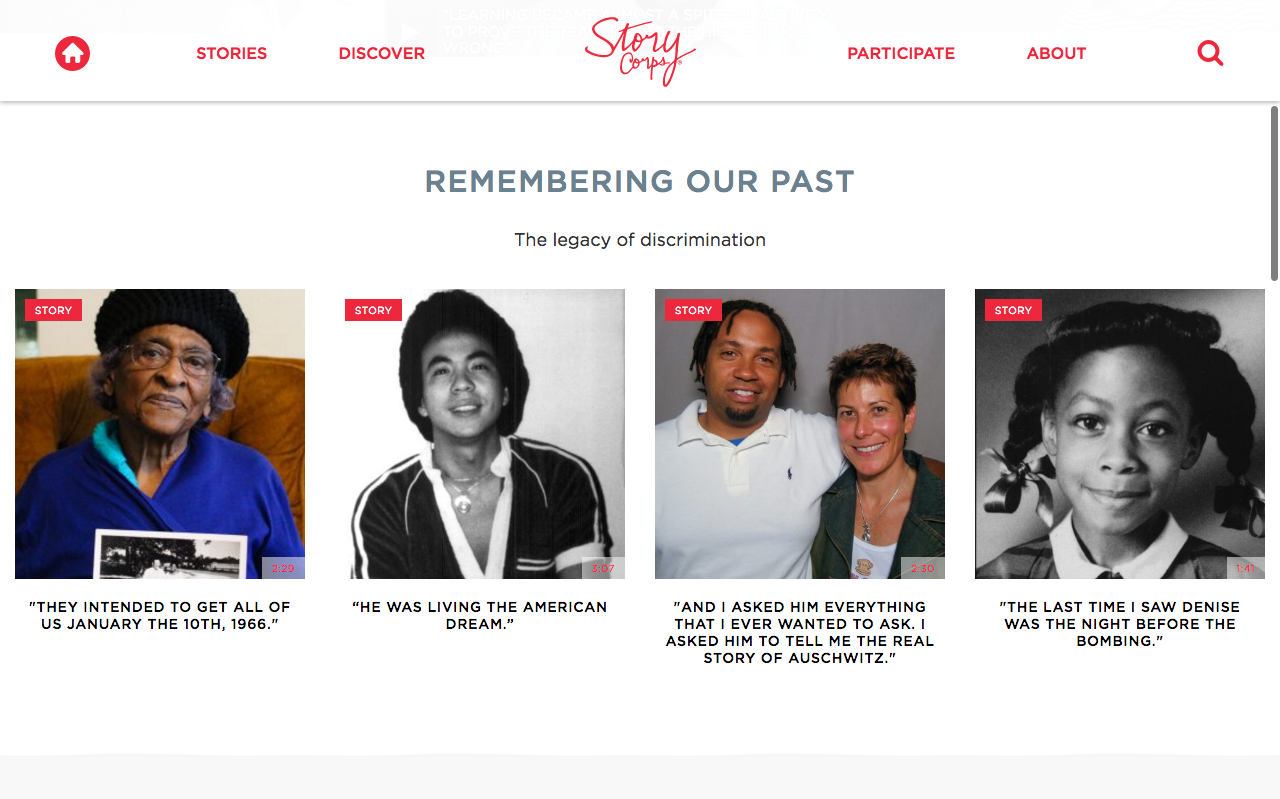
    Take a look at how StoryCorps displays their multimedia stories on their website:

    I encourage you to subscribe to their free podcast.

    Want to work or intern at StoryCorps? Apply here. I also suggest you take a look at their blog to learn more about their initiatives like the Justice Project.

    Check out some of their interview questions on their Instagram account: